
First and foremost let’s get something out of the way, while we can help you hire an Accounting Virtual Assistant, we aren’t accounts or lawyers at the end of the day. Do your own risk assessment and make your own decision.
Pick up the iPhone that’s on your desk right now.
You probably think of Steve Jobs as the inventor. But there was a guy behind the scenes most people never heard of.
His name is Jony Ive.
And he did 90% of the work on the iPhone.
Steve was the mastermind. Jony was the executor.
And hiring an Accounting Virtual Assistant should be EXACTLY the same thing for your CPA firm or business.
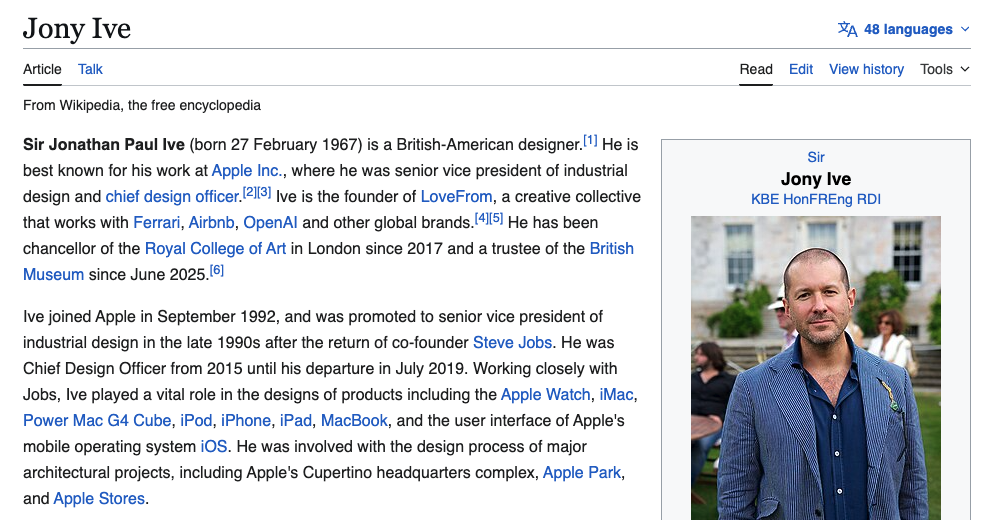
Steve had the vision. Jony built it. Steve came back, nitpicked the details, fixed the packaging, signed off on every prototype. The iPhone shipped with Apple’s name on it because Steve signed off on it. Not because he did it all himself.
That’s the model for a CPA firm with an offshore Accounting Virtual Assistant.
You’re Steve. Your firm. Your name. Your sign-off. Your liability.
The Accounting Virtual Assistant is Jony. Does 80-90% of the work. Hands it to you clean. You review. You nitpick. You sign.
Return goes out. Client happy.
Who Should Hire An Accounting Virtual Assistant
If you run a CPA firm, accounting firm, or financial services practice — you’re in the right place. Keep reading.
If you run a business and your accounting operations are eating your week — invoicing, AP/AR, reconciliations, chasing down payments, feeding your CPA proper data — you’re in the right place too.
If you just want someone to clean up your monthly books because you’re a solopreneur whose QBO has gone sideways, you want a Bookkeeping Virtual Assistant. Separate guide coming shortly. Come back for it.
If you want a US-based professional bookkeeper handling your books in-house, here’s our guide on hiring a Bookkeeper.
This article is about the offshore VA-model hire for Accounting work. Dedicated person, working under your licensed staff’s direction, handling the volume work that drowns your practice or your business.
What An Accounting Virtual Assistant Can And Can’t Do
Numbers are numbers so allow me to draw this in black and white for you.
What they CANNOT do:
- Sign a US tax return
- Give tax advice to your clients
- Replace your licensed review
What they CAN do:
- Daily bookkeeping in QBO, QBD, Xero, FreshBooks
- AP and AR — paying bills, sending invoices, chasing receivables
- Bank and credit card reconciliations
- Journal entries and month-end close
- 1099 prep and tracking
- Payroll coordination (working with your payroll processor)
- Financial reporting — P&L, Balance Sheet, AR aging, cash flow
- Data entry and pre-prep into UltraTax, Drake, CCH Access
- Document chase and client follow-up
- Multi-entity books and multi-state reconciliation at the upper end
- VAT and international sales tax filings
They can’t be CPAs.
The credential is US state-issued.
They’ve never set foot in the US.
Self explanatory.
What they ARE is trained Accountants.
Some have Big Four backgrounds. Some are part-qualified ACA, ACCA, or CIMA. Some have a decade-plus of direct US-facing experience and are more than capable of helping you to prepare US returns.
They just can’t, and won’t ever be able, to sign off on them.
The Question Every CPA Firm Owner Asks
“Can they do US tax returns?”
Straight answer:
No.
But it depends what you mean by “do”.
Not verified to do that. Not credentialed. Not possible. Every CPA firm owner I talk to gets to this question within the first five minutes of the call. The answer is always the same.
Here’s what most firm owners miss:
Even if you hired a US CPA tomorrow — full-time, in your office, properly licensed — it’s still probably YOUR butt on the line if something goes sideways.
It’s your firm and your name that’s going to likely be served with negligence or malpractice, even if a state board or credential might impact the individual, US accountant.
You’re the one signing off still.
So the real question isn’t “offshore vs. US.”
The real question is:
What are you paying for that probability reduction?
Option A:
$100,000+ for a US staff Accountant in your office. Plus benefits. Plus PTO. Plus three months to recruit one. Plus the risk they leave in 18 months for a 15% raise somewhere else. They have some of their own career on the line, so they’ll probably do good work. You sign off on everything.
Option B:
80-90% less expensive per year for an offshore Accounting VA who does 80-90% of the work. You sign off on everything.
Like I said, at the end of the day you’re still the one who might get dinged.
Back To Steve and Jony
So, Steve and Jony did something like a 10/80/10 split.
Steve had a wild idea or dream. He’d tell it to Jony. Then Jony would go to work. Steve reviewed every prototype. He killed things he didn’t like. He demanded iterations. He obsessed over the packaging — the unboxing moment, the way the lid peeled back, the exact feel of the first touch.
That’s potentially how your Accounting Virtual Assistant can work.
The VA doesn’t replace you — they give you back that huge 80% chunk of time in the middle.
Frees you from data entry at 11pm on a Tuesday in March. Frees you from chasing clients for missing W-2s. Frees you from categorizing 400 bank transactions in QBO before you can even look at the P&L.
Frees you to do the work that actually requires your license.
Review. Judgment. Client advisory. Sign-off on the stuff that matters.
That’s how you grow a CPA practice without burning out or hiring a full-time US salary for grunt work.
The Business Owner Version
Same framework. Flipped slightly.
You’re Steve. You run the business. You know how the money moves. You know what normal looks like and what a weird transaction looks like when you see one.
You do not need to personally categorize 400 expense transactions a month in QBO.
That’s Jony’s job.
Your job is:
- Review the P&L once a month
- Spot-check the category rollups
- Look at AR aging
- Ask questions when something doesn’t match your gut
- Sign off
That’s it. That’s the Steve job for your own books.
The alternative is what most business owners do:
DIY the whole thing until the books are a mess. Pay your CPA $8,000 a year just to clean it up before filing. Ignore it all year. Panic in April.
The VA model replaces that with clean books every month. No April panic. Your CPA just files your taxes — no extra cleanup fee because there’s nothing to clean up.
How We Hire Accounting Virtual Assistants
You book a call.
We scope the role in 20 minutes — scope of work, tools, tier, urgency.
We run our internal rubric screen. Roughly 10% of applicants pass.
Global pipeline. Not single-region.
Within five business days you get three to five candidates to interview. You pick one. They start the following week.
Flat monthly rate. No hourly tracking. No packaged hours. Six-month minimum commitment. One-year replacement — if they don’t work out, we replace at no cost.
FAQs About Hiring Accounting VAs
Can they do US tax returns?
No. They can’t “do”.
They’re not credentialed to sign returns, give tax advice, or replace your licensed review. They handle the 80-90% of work around the return — data entry, bookkeeping, document prep, pre-entry into UltraTax, Drake, or CCH Access, client document chase. You sign. Same as any staff Accountant.
Is this allowed for a CPA firm?
Every Big Four firm runs thousands of offshore staff doing exactly this work.
You maintain full control, full liability, full authority. The VA is staff.
How much does it cost?
Depends on tier and scope, but it’s going to be under $40,000 annually.
Flat monthly rate, managed. No hourly, no packaged hours. Six-month minimum. Meaningfully less than a US in-house hire. Exact number gets scoped on the call.
What tools do they know?
QBO, QBD, Xero, FreshBooks. UltraTax, Drake, CCH Access at the CPA firm level. Bill.com, Ramp, Dext. Gusto and ADP for payroll.
Excel through advanced. NetSuite and Sage at the upper tier. Each placement is screened on the specific tools you use.
How fast can I have someone?
Five business days from scope call to first interviews.
Typical placement starts within 7-14 days.
What’s the difference between an Accounting VA and a Bookkeeping VA?
An Accounting VA handles broader operations work for CPA firms and established businesses — reconciliations, AP/AR, month-end close, 1099 prep, tax doc organization, financial reporting support, often across multiple client files.
A Bookkeeping VA is a narrower hire for a single business owner who wants clean monthly books and nothing else. Related article on Bookkeeping VAs coming shortly.
Closing Thoughts
At the end of the day, your clients don’t pay you to do the books. They pay you for your CPA advice. Save money on taxes. Reduce headaches.
And if you’re keeping all the books and doing all the grunt work yourself, you’re doing less of that important work.
If this resonates with you — book a call to learn how we can place an Accounting Virtual Assistant into your business in 1 week: