

Can AI just replace everything in terms of outsourcing Ecommerce customer service?
Let’s get this one out of the way first.
Every Ecommerce founder in 2026 is asking the same question: “Can’t I just install a chatbot and be done with it?”
Short answer: Kind of. But not really.
Here’s what AI actually handles well in Ecommerce Customer Service:
“Where’s my order?” — AI pulls the tracking number from Shopify, sends it, done. No human needed.
“What’s your return policy?” — AI pulls the policy from your knowledge base, sends it, done.
“Do you ship to Canada?” — Same thing. One correct answer. Pulled from a database. Delivered instantly.
For questions that have one right answer that lives in a system somewhere, AI is legitimately faster and cheaper than a human. It can deflect 30-50% of your ticket volume without breaking a sweat.
Now, pay attention:
The moment a customer has an actual problem — wrong item shipped, package arrived smashed, billing dispute, or they’re just angry — the chatbot either escalates it (if you set it up correctly) or makes things worse (if you didn’t).
And “makes things worse” means a one-star review, a chargeback, and a customer who tells 15 people your brand has no customer service.
AI handles the routine stuff. It doesn’t handle the customer.
You still need a person for handling customers who are really offer their rocker.
Someone who knows your product, knows your brand voice, and can actually solve a problem that doesn’t fit a template. Someone who can tell the difference between a customer who needs a tracking number and a customer who’s about to leave a one-star review because they feel ignored.
That person is the hire this article is about.
I’ve Been On Both Sides of Outsourced Ecommerce Customer Service
I co-founded an olive oil company called Selo Olive back in 2018. We used, and still use, ShipBob for fulfillment — they store the inventory, packed the orders, shipped them out.
But when a customer emailed asking why their olive oil arrived frozen in January, that wasn’t ShipBob’s problem. That was mine, or my co-founder’s.
When someone wanted to know how the oil was pressed, where the olives came from, whether it was blended or single-origin — that was ours
When an order broke in transit — ours.
I also ran a dropshipping store called Confidence Direct back in 2020, selling consumer goods off AliExpress. Height boosters, slimming vests, that kind of thing.
(Pulled from the internet’s WaybackMachine — it looked a bit better than this in reality!)
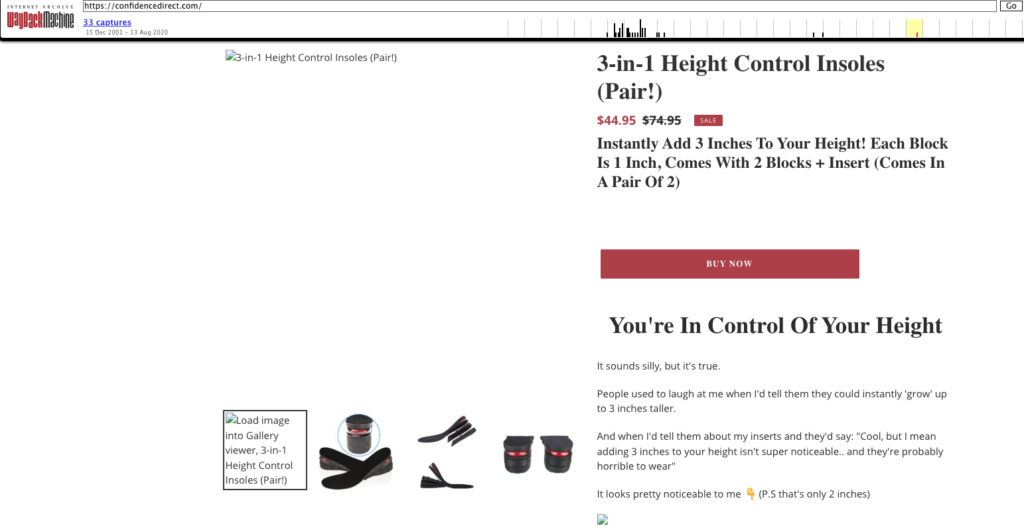
The inquiry volume on that store was insane compared to the olive oil business. Completely different animal. Different customer. Different urgency. Different tone. Different problems.
Two Ecommerce businesses. Two completely different Customer Service profiles.
And now, here at HireUA, we’ve placed over 400 people into Ecommerce brands.
I’ve been the founder answering tickets at 10pm.
I’ve been the agency finding the person who replaces that founder at 10pm.
I know what this hire looks like when it works. And I’ve seen what it looks like when it doesn’t.
What Bad Ecommerce Customer Service Actually Costs You
Most founders think about Customer Service as a cost center. Something you minimize. Something you spend as little as possible on.
Here’s what they’re not calculating:
A single chargeback costs you between $15 and $75 in dispute fees — on top of losing the product AND the revenue. If your chargeback rate climbs above 1%, your payment processor flags you. Above 2%, they can freeze your account entirely.
78% of consumers have changed their mind about buying a product after reading a negative review.
Just one angry customer who left a one-star review saying, “Emailed support three times, never heard back” is now sitting on your product page turning away 3 out of every 4 potential buyers who see it.
That review sits there for years.
But get this:
The real cost isn’t the chargeback or the review. It’s the customer who was going to reorder four times and never did because nobody answered their email for three days.
You never see that number in your analytics. There’s no dashboard for “customers who would have come back but didn’t.”
At it’s core, customer service is actually…retention.
And every day you don’t have a good one, you’re leaking revenue you can’t measure in a way you’d never accept in your advertising dashboard or your page load time.
The 3 Ways People Outsource Ecommerce Customer Service
If you’ve decided to outsource Ecommerce Customer Service, you’ll land on one of three models. Each one has a disease that nobody selling it is going to tell you about.
Model 1: The BPO / Call Center
Who: SupportYourApp, TaskUs, SuperStaff, the big names.
These companies sell “seats.” You pay a monthly fee, they assign an agent (or a fraction of an agent), and that person handles your tickets alongside 5-15 other brands.
The pitch sounds great: 24/7 coverage, multilingual support, AI-enhanced, scale up or down anytime.
Here’s the thing:
The person answering your customer’s email at 2am also answered a SaaS company’s billing dispute at 1:45am and a fashion brand’s return request at 1:30am. They don’t know your product. They don’t know your brand. They’re reading a script that was written during a 30-minute onboarding session.
Maybe you’re fine with that. A lot of brands are, and it works for them.
But if your brand voice matters to you — if you want the person answering your customer to actually know your product and sound like your company — then sharing an agent with 15 other brands probably isn’t the move.
You make the call on that one.
Model 2: The Marketplace VA
Who: Upwork, Fiverr, OnlineJobs.ph.
The most common advice you’ll hear is, “Just hire a Filipino VA for $3/hour.”
And here’s what happens:
You post the job. You get 500 applications. You pick the one with the nicest-looking profile. They start strong. You train them on your Shopify dashboard, your return policy, your FAQ.
Three months later, they disappear. Or they’re juggling three other clients. Or they reply to a customer complaint with a response so robotic that you get a chargeback instead of a resolution.
So you start over. Post the job again. 500 more applications. Pick another one. Train them. Lose them.
This is the cycle that every Ecommerce founder on the planet is stuck in. And every time you restart it, you lose 2-3 weeks of training, a handful of angry customers, and whatever sanity you had left.
Model 3: The Founder Who Can’t Let Go
This is you right now.
You’re doing 30-60 tickets a day. You’re answering “where’s my order?” between strategy sessions. You’re writing a return label while trying to figure out your Q3 ad budget.
You know you need to hire someone. You’ve known for months.
But the last time you tried, the person was clueless. Or they sounded like a robot. Or they gave a customer the wrong answer and you spent three hours fixing it.
So you went back to doing it yourself. Because at least you know it gets done right.
And the brutal part:
Every hour you spend answering a shipping question is an hour you didn’t spend on the thing that actually grows the business.
If your brand does $100,000/month in revenue, your time — as the founder — is worth roughly $200-$300/hour when you’re focused on growth. When you’re answering, “Can I exchange this for a size medium?” you’re doing a $12/hour task at a $200/hour opportunity cost.
You know this. You just haven’t found the right person yet.
What This Hire Actually Looks Like When It Works
There’s a version of this hire where you stop thinking about Customer Service entirely.
Not because you don’t care about it. Because someone else owns it. Fully. Completely. The way it should be.
They know your Shopify dashboard inside and out. They process returns, issue refunds, update orders, and handle exchanges without asking you a single question.
They know your product well enough to answer questions you didn’t put in the FAQ.
They know your brand voice well enough that a customer can’t tell whether it’s you or them responding.
They know when to apologize and offer a discount, when to hold firm on a policy, and when to escalate to you because the situation actually warrants it.
When a new type of question starts coming in — something not covered in the FAQ — they flag it, write a draft response, and send it to you for sign-off. Once you approve it, they add it to the knowledge base and never ask you about it again. Over time, they build out the system that makes themselves faster and your brand smarter.
They respond in under 2 hours during business hours. They handle your email, your live chat, your Instagram DMs, and your Amazon Seller Central messages — all from one dashboard.
And when they go on vacation, there’s a replacement who already knows your business.
That’s not a fantasy. That’s what a properly screened, properly placed Ecommerce Customer Service hire looks like.
The problem isn’t that this person doesn’t exist.
The problem is that you can’t find them on Upwork, you can’t find them in a BPO’s shared pool, and you definitely can’t find them by scrolling through 500 applications on OnlineJobs.ph and picking the one with the best headshot.
Finding this person requires a real screening methodology. A rubric. An understanding of what Ecommerce Customer Service actually demands — not just “can they type fast and speak English.”
That’s what we do.
We’ve placed over 400 people into Ecommerce brands. We know what separates the ones who last 3 months from the ones who last 3 years. We screen for it before they ever reach your inbox.
One flat monthly fee. Replacement guarantee. 5 business days to pre-vetted candidates.
Book a call to hire an Ecommerce Customer Service specialist →
Closing Thoughts — Outsource Ecommerce Customer Service
Back when I was running Selo Olive, I remember a woman emailing us at 11pm on a Tuesday asking if our oil was safe for her daughter’s nut allergy.

That wasn’t a tracking number question. That wasn’t in the FAQ. That was a mom, worried about her kid, and she needed a real answer from someone who actually knew the product.
I answered it myself.
Took me 2 minutes.
But if I’d had a chatbot fielding that email, she would have gotten a generic response about ingredients and allergen policies — or worse, no response until morning. And she would have bought from someone else.
At Confidence Direct, the problems were different. Higher volume, lower stakes, faster turnaround. Most of it could be templated. The customer just wanted to know their package was coming.
The point is that Ecommerce Customer Service isn’t one thing. It depends on your product, your customer, your ticket volume, and how much your brand voice actually matters to the people buying from you.
What doesn’t change is this:
At some point, you need to hand this off to someone. And when you do, the quality of that person determines whether your customers stay or leave.
I’ve been the founder who should have hired sooner.
I’ve also been the agency that helps founders like you find the right person the first time instead of cycling through marketplace hires every 90 days.
If that’s where you are, we should talk.
FAQ: Outsource Ecommerce Customer Service
How much does it cost to outsource Ecommerce Customer Service?
It depends entirely on which model you choose. BPO call centers charge $1,500-$4,000/month for a shared agent — meaning your person is also handling tickets for other brands.
A dedicated hire through a placement agency like HireUA runs a flat monthly fee for a person who works exclusively for your business.
A marketplace VA on Upwork or OnlineJobs.ph might cost $500, but the training time, churn, and quality risk often make it the most expensive option in the long run.
When should I stop doing Customer Service myself and hire someone?
When it’s costing you more to do it yourself than to pay someone else.
If you’re spending 2+ hours per day on tickets and your business does $50K+/month, the math is already upside down. Your time as the founder is worth multiples of what a skilled CS hire costs. The moment Customer Service is taking you away from marketing, product, or strategy — you’re past the breaking point.
Can AI replace a Customer Service person for my Ecommerce store?
AI can handle the simple stuff — order tracking, return policy questions, shipping estimates.
That’s real and worth using. But it can’t handle complaints, billing disputes, angry customers, product questions that aren’t in the FAQ, or anything that requires judgment. The best setup is AI handling the routine tickets while a trained human handles everything else.
What should I look for in an Ecommerce Customer Service hire?
Shopify proficiency, experience with helpdesk platforms like Gorgias or Zendesk, written English that sounds human (not scripted), and the judgment to know when a 10% discount saves a customer relationship versus when it sets a bad precedent.
The best Ecommerce CS hires are the ones who can think like a business owner, not just follow a flowchart.
What’s the difference between a BPO and a placement agency for Ecommerce Customer Service?
A BPO assigns you a shared agent from their pool. That person works for the BPO, not for you.
If they leave, the BPO swaps in someone new and calls it a “seamless replacement.” A placement agency finds you a specific person — vetted, screened, matched to your business — who works directly for you. They’re your team member, not a rented seat.
How long does it take to onboard an Ecommerce Customer Service hire?
If the person is properly screened and experienced, most Ecommerce brands can have them fully operational within 1-2 weeks.
The onboarding is mainly product knowledge, brand voice training, and access to your tools — Shopify, your helpdesk, your returns platform. The biggest mistake founders make is hiring someone with no Ecommerce experience and then spending 6 weeks training them on basics. Hire someone who already knows the ecosystem and cut that timeline dramatically.

Tell Us Who You Need.
Tell us what needs to get off your plate. We’ll help define the role, tell you what it should cost, and recruit in the talent market where that role is strongest.