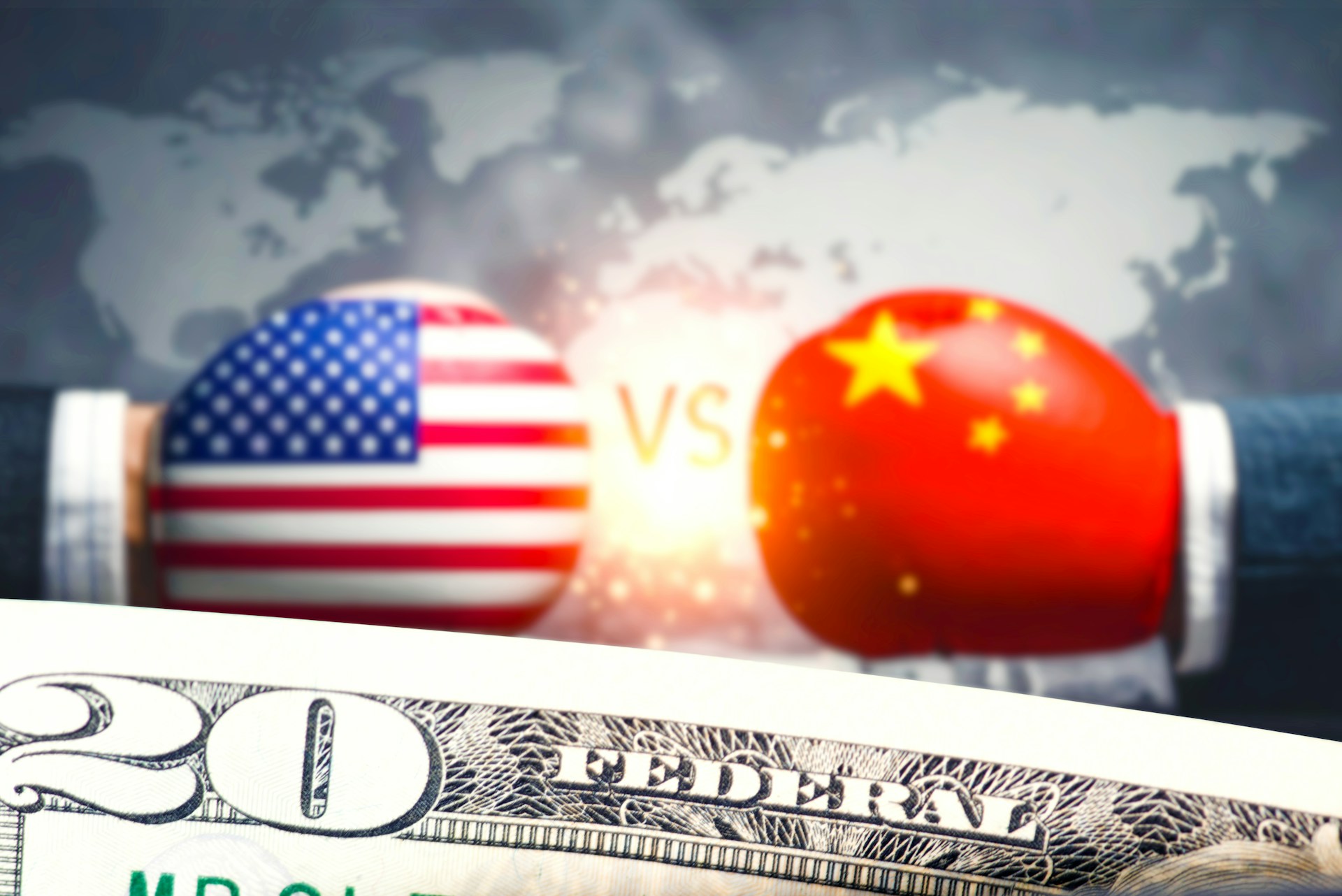

In May 2025, the US government killed the de minimis exemption for Chinese imports.
Every package from China — no matter how small — now gets hit with tariffs or a flat customs charge between $80 and $200. Per item.
Four million duty-free packages a day became 600,000 overnight. An 85% drop.
By August, the exemption was dead for every country. Not just China.
And the classic dropshipping model — find a product on AliExpress for $8, sell it for $30, ship it directly from a factory in Shenzhen to a customer in Ohio, pocket the margin — broke.
Not struggled.
Broke.
Here’s the thing:
The Dropshipping VA role didn’t die with it.
It got harder. It got more complex. And the person you need in the seat today is a fundamentally different hire than the one you needed in 2023.
This is what the role actually looks like now.
TLDR
- The US government eliminated the de minimis exemption for Chinese imports, customs fees became INSANE
- The traditional dropshipping model has essentially collapsed and forced many store owners to pivot.
- Successful dropshippers now bulk import to US warehouses, focus on high-ticket products, or source from non-Chinese suppliers.
- A Dropshipping Virtual Assistant’s role has evolved to include supplier coordination, complex customer service, and multi-platform management.
- Finding a qualified Dropshipping Virtual Assistant now costs between $7-12/hour — $3 an hour…you get what you pay for.
Table of Contents
The $3/Hour VA Was Real. The Job They Did Is Not.
Two years ago, a Dropshipping Virtual Assistant did this:
- Customer orders on Shopify.
- VA places the order on AliExpress with the customer’s shipping address.
- AliExpress ships it directly from China.
- VA copies the tracking number back into Shopify.
- Customer gets a shipping confirmation.
- Done.
That was the entire job. Repeatable. Mechanical. A $3/hour VA could do it in their sleep.
And honestly, for that workflow, $3/hour was the right price.
But get this:
That workflow only existed because of one rule — packages under $800 could enter the US with zero duties, zero customs paperwork, and zero delays at the border.
The moment that rule died, so did the simplicity.
Your $8 AliExpress product now carries an $80-200 customs charge on top of it. The math doesn’t work. A $30 sale minus $8 product cost minus $80 duty…
Well, you get where I’m going. Ya might as well just set the money on fire.
The stores that survived didn’t keep doing the same thing. They changed the entire operation.
What Smart Dropshippers Actually Do Now
The operators who are still profitable in 2026 look nothing like the AliExpress-to-customer model.
They’ve moved in one of three directions:
Bulk Import to US 3PLs
Instead of shipping one phone case at a time from China, they import 500 units into a 3PL warehouse like ShipBob. Pay tariffs once on the bulk shipment. Then every customer order ships domestically — no customs, no delays, 2-5 day delivery. It’s not pure dropshipping anymore. It’s a hybrid. You hold some inventory through a third-party warehouse without managing one yourself.
High-Ticket Dropshipping
Cold plunges. Infrared saunas. Medical devices. Outdoor gear. Premium pet products.
If you’re selling a $500 product with a 40% margin, you can absorb a tariff.
If you’re selling a $15 phone case, you can’t.
The smart operators pivoted to high-ticket before the tariffs even forced it. We worked with an entire cohort of high-ticket dropshipping stores through a coaching program — saunas, wheelchairs, cold plunges, infrared beds — and they were already running this model back in 2023.
The tariffs just validated what they’d figured out early.
Non-Chinese Sourcing
Suppliers in India, Vietnam, Turkey, Mexico. The tariff burden is significantly lower. The product variety isn’t AliExpress-level yet, but it’s growing fast. And your customer gets a package that clears customs without a $100 surcharge.
Every one of these models is more operationally complex than the old one. More suppliers to manage. More logistics to coordinate. More platforms to maintain. More customer communication when things go wrong.
Which means the VA job got harder.
What a Dropshipping Virtual Assistant Actually Does in 2026
The old task list — place order, copy tracking number, send confirmation — is about 20% of the role now.
Here’s what the other 80% looks like:
Supplier Communication
You’re not clicking “buy” on AliExpress anymore. You’re coordinating with 3PL warehouses, negotiating with suppliers in multiple countries, tracking bulk shipments, managing inventory levels, and reordering before you run out. Your VA is the person keeping all of those plates spinning.
Customer Service…With Judgment
A customer’s package is delayed at customs.
Another customer received the wrong variant because the supplier shipped from a different warehouse. A third customer wants a refund but the product was drop-shipped from Turkey and the return logistics don’t work the same way. These aren’t template responses. These require someone who understands your operation well enough to make a call.
For more info on creating processes and SOPs around Virtual Assistants working with customer service, read this article
Multi Platform Product/Listing Management
It’s not just Shopify anymore.
TikTok Shop has its own fulfillment integration.
Amazon has its own listing requirements.
Walmart Marketplace is growing. Your VA is managing product listings, pricing, and inventory across multiple platforms — each with its own rules, its own interface, and its own customer expectations.
Finding Winning Products
Finding a “winning product” in 2026 means factoring in tariff classification codes, duty rates by country of origin, shipping costs from domestic warehouses, and platform fees — not just “this looks cool and has good reviews on AliExpress.”
Returns & Refunds, But Your Dropshipping VA Must Use Nuance
In the old model, the product cost so little that most stores just refunded the customer and told them to keep it. That doesn’t work when your product costs $200+ and your margin depends on getting it back. Someone has to manage the return logistics — which are exponentially more complicated when the product came from a third-party supplier in a different country.
And here’s the kicker:
None of this is $3/hour work. The person who can manage supplier relationships across three countries, keep inventory levels synced across a 3PL and two marketplaces, and make judgment calls on customer escalations — that person has options. They don’t need your job. You need them.
Finding someone who can do this well requires more than scrolling Upwork for the cheapest bid. It requires screening for judgment, operational experience, and the kind of problem-solving that keeps a complex supply chain running when things break. That’s not something most store owners know how to screen for. Because that’s not your job.
It’s ours.
The “Passive Income” Fantasy
One more thing.
If you’re hiring a Dropshipping Virtual Assistant because you want “passive income” — someone to run your store while you sit on a beach — you’re going to be disappointed.
A VA makes the work manageable. They don’t make it invisible.
The stores that actually work in 2026 have an owner who is paying attention. Reviewing numbers. Making product decisions. Adjusting pricing when tariff costs shift. Talking to suppliers when quality drops.
The VA handles the daily execution so you don’t have to be in the store 12 hours a day. That’s the value. That’s the hire worth making.
If you’re looking for someone to build your business for you at $5/hour — the person who can build a business is building their own.
How It Works
You tell us what your store needs. We ask the questions most people don’t think to ask — what platform, what suppliers, what’s the actual daily workflow, what broke with the last hire.
We source and screen candidates against a 100-point rubric built across 1,100+ global placements.
You see a shortlist of 5 candidates who’ve been vetted for the specific operational complexity your store requires.
Candidates in 5 days.
One all-in monthly fee. If the hire doesn’t work out, we replace them. No additional cost.
FAQs — Dropshipping Virtual Assistant
How much does a Dropshipping Virtual Assistant cost in 2026?
For someone competent enough to manage the 2026 version of this role — supplier coordination, multi-platform listings, customer service with judgment — expect $7-12/hour depending on experience and region.
The $3/hour floor from the AliExpress era priced the simplicity of that workflow. The workflow isn’t simple anymore.
Can I still dropship from China?
You can, but the economics changed dramatically.
Direct-to-consumer shipping from China now carries tariffs and customs charges that didn’t exist before May 2025. Most profitable stores have shifted to bulk importing into US-based 3PL warehouses, sourcing from non-China suppliers, or selling high-ticket products where the margins can absorb the added costs.
What’s the difference between a Dropshipping VA and an Ecommerce Virtual Assistant?
An Ecommerce VA typically works for a business that holds its own inventory and manages its own fulfillment.
A Dropshipping VA manages the added complexity of third-party suppliers, external fulfillment, and the coordination between your store and someone else’s warehouse. The skill set overlaps.
Should I hire a VA or use automation tools like AutoDS?
Tools like AutoDS, DSers, and Zendrop handle the mechanical parts — syncing inventory, auto-routing orders, updating tracking.
They replaced the $3/hour copy-paste job. What they don’t do is manage suppliers when something goes wrong, handle customer escalations that require judgment, or adapt when your Turkish supplier suddenly can’t fulfill for three weeks. The tool handles the plumbing. The VA handles the problems.
Is dropshipping still worth starting in 2026?
That’s a bigger question than this article.
What we can tell you is that the stores still making money have evolved well past the old model — they’re running real operations with real suppliers, real inventory management, and real customer service. If you’re building one of those stores and you need someone sharp in the seat, that’s the hire we make.
What else can a Virtual Assistant do?
Check out this article of 130 tasks a Virtual Assistant can help with.
Closing Thoughts — Dropshipping Virtual Assistant
The tariffs didn’t kill dropshipping. They killed the easy version of it.
The stores that survived are running harder operations with tighter margins and more moving parts than ever. That means the Virtual Assistant you hire matters more — not less — than it did two years ago.
If you’re still looking for the $3/hour AliExpress order-placer, you’re hiring for a job that doesn’t exist anymore.
If you’re looking for someone who can actually run the 2026 version of this operation — supplier coordination, multi-platform management, customer service that requires real judgment — that’s the hire we place.