
I ask every candidate the same question in their application:
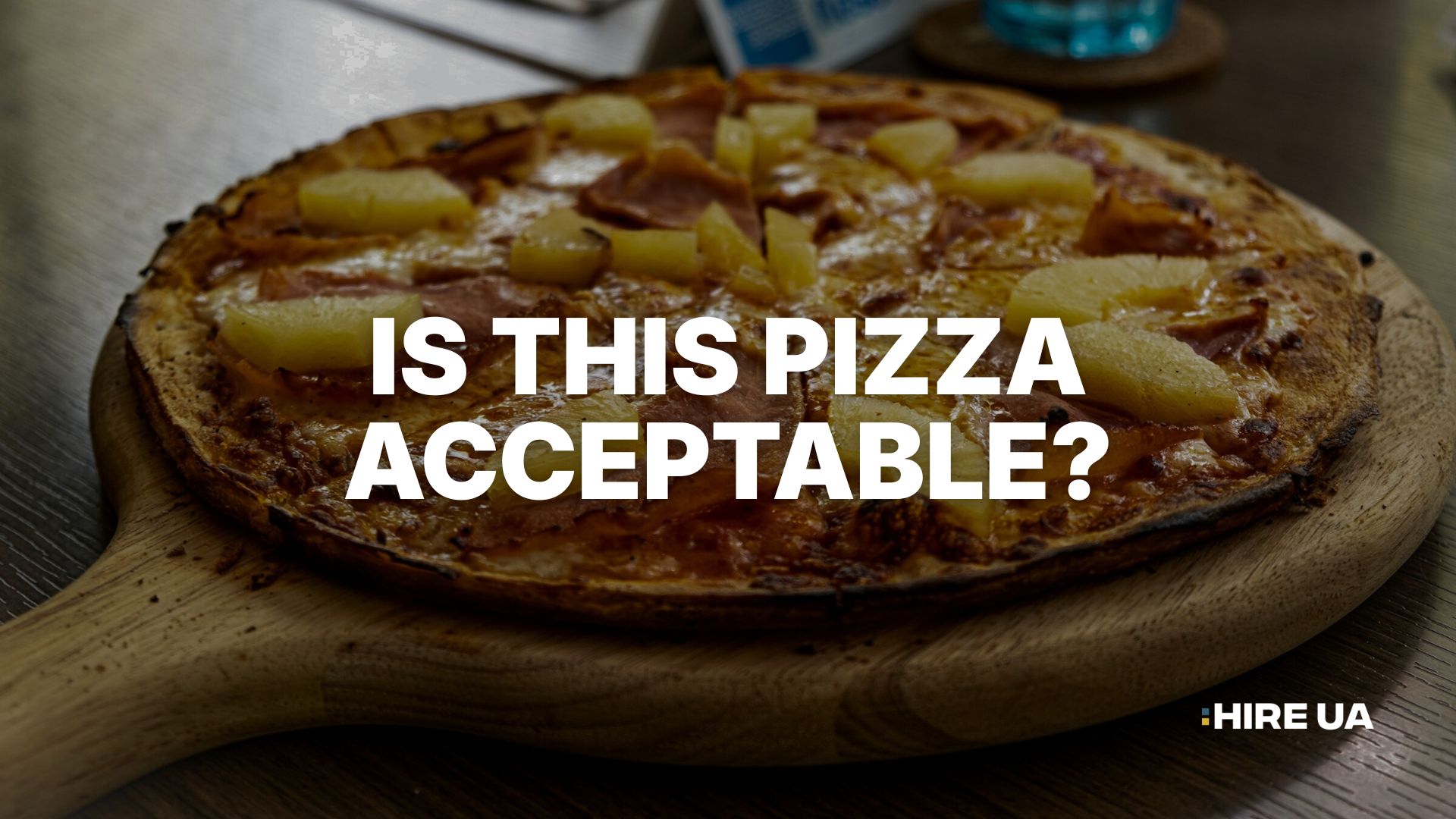
“Does pineapple belong on pizza?”
Not because I care about their answer.
Because I care if they HAVE one.
Even though pineapple pizza is completely unacceptable (Italian roots here).
Here’s what I specifically do NOT want to hear:
“Well… I don’t like pineapple on pizza, but I don’t judge. I think we should be accepting of diverse choices.”
The hell, honestly…
If someone can’t have an opinion about pizza, how are they going to have an opinion about anything in your business?
You’re not hiring a diplomat. You’re hiring a person. With a personality.
I actually run a full lightning round of personal questions in every interview.
Things like:
→ What did you want to be as a kid?
→ Ferrari or Lamborghini?
→ Snow or surf?
→ Do you wear sunscreen?
→ What’s the craziest thing you’ve done?
These questions have zero to do with the job.
They have everything to do with whether I want to talk to this person for more than 15 minutes.
And here’s the kicker:
If someone chooses neither Ferrari nor Lamborghini and says BMW — I know they’re not someone who shoots for the stars. Reliable executor? Probably. Running the company someday? Probably not.
If every answer feels calculated and safe, that tells me exactly how they’ll operate in the role.
Your interview process is probably broken. Not because you’re asking the wrong technical questions. Because you’re not testing for personality at all.
Those two minutes tell me more about someone than the previous twenty.
Here’s why:
If someone can’t have an opinion about pizza — a completely zero-stakes, no-wrong-answer question — how are they going to push back on a bad process at work?
How are they going to tell a client that their brief doesn’t make sense?
How are they going to flag a problem that nobody else wants to talk about?
People who don’t have opinions in interviews don’t have opinions at work. And people without opinions don’t drive things forward. They wait to be told what to do. They agree with whoever spoke last. They optimize for not getting in trouble rather than for getting things right.
The best hires I’ve ever made lit up during the lightning round. They had stories. They had takes. They laughed. They got animated. You could see the person behind the resume.
The worst hires I’ve ever made gave careful, diplomatic non-answers to every question. “I don’t really have a preference. Both are great.” They were perfectly polished in the interview and completely invisible at work.
This applies way beyond hiring.
Pay attention to how people respond to low-stakes questions in any context. In sales calls — does the prospect engage or deflect? In team meetings — does the new person contribute or sit silently? On a first date — does the person across from you have things they care about, or are they just trying to say the right thing?
People reveal themselves in the margins. Not in the rehearsed answers. Not in the polished LinkedIn summaries. In the moments where there’s no script and no stakes and they have to just… be a person.
That’s where the truth lives.
I’m not hiring a diplomat. I’m hiring a human.
To learn how we work:
Kyle Mau
Read Next: How to Hire Employees — What 10,000+ Hours of Interviews Taught Me