

Every time I go to Taco Bell, I order the same thing.
Steak quesadilla — none of their weird jalapeno sauce. The nachos. And two crunchy tacos.
It’s fast. It’s cheap. I know exactly what I’m getting. And for about 15 minutes after I eat it, I feel great.
Then…reality sets in. And you start wondering if it’s safe to drive home or if you should stay in your seat for a bit longer and let things settle. Or exit stage left.
I’ve used Fiverr and Upwork the same way. Thumbnail designers. Video editors. Writers. Quick project, reasonable price, decent-looking result on the first pass.
And then…the same feeling.
The thumbnail looked fine until I put it next to one made by someone who actually understood the brand. The writer delivered on time but every paragraph read like ChatGPT in a trench coat. The editor hit the deadline but missed every single creative note I gave them.
Fast. Cheap. Satisfying at first.
Then you feel like shit.
I’ve placed thousands of people, overseen 10,000 interviews, and screened 100,000 CVs in my life — not through Fiverr or Upwork, but through my own recruiting agency. And at least 20% of the business owners who book calls with us bring up one or both of these platforms within the first five minutes.
Not to brag about them.
To explain what went wrong.
This article is the honest comparison that neither Fiverr nor Upwork wants you to read. Not written by a freelancer deciding which platform to join. Written by someone who hires people for a living and has used both sides of the counter.
Last Updated: March 19th, 2026
Table of Contents
The Actual Differences (For People Who Hire, Not Freelancers)
Every article on the internet comparing Fiverr and Upwork says the same thing:
“Fiverr is better for small, one-off projects. Upwork is better for long-term work.”
That’s true. It’s also completely useless.
Here’s what those articles don’t tell you — because they’re all written for freelancers, not for the person writing the check.
Fiverr:
You browse. You pick a “Gig.” You pay upfront. The freelancer delivers on a timeline.
It feels like ordering from a menu. And that’s by design — Fiverr built the entire platform around making hiring feel like an Amazon purchase. Click, pay, receive.
The problem is that hiring a person is not like buying a product. The menu looks clean. The reviews look great. The portfolio images are polished.
Then you get the delivery and realize the portfolio was their best work from three years ago, the reviews were from $5 logo gigs, and the “Standard Package” you paid for doesn’t include the one thing you actually needed — which is now an upsell.
Nothing is $5 anymore, by the way. Saying Fiverr is cheap is like saying McDonald’s still has a dollar menu because you can technically get a small fry for that price.
There’s a concept called the Big Mac Index — it uses the price of a Big Mac to compare purchasing power across countries. Fiverr needs its own version. Call it the Gig Index. The listed price tells you almost nothing about what you’re actually going to pay.
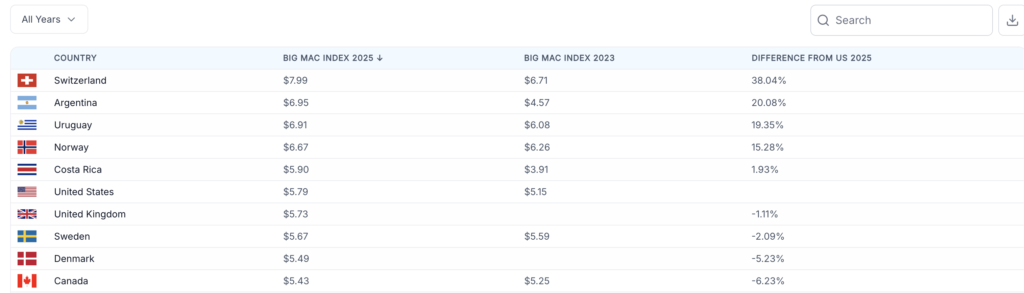
You see a gig for $50. Great.
But the Basic package doesn’t include revisions. Or source files. Or commercial rights on the music used by a Video Editor or stock image used by a Graphic Designer. Or delivery in less than two weeks.
So you upgrade to Standard — $120.
Then you add rush delivery — $40.
Then commercial rights (but do you really trust the Freelancer charging “$5” that they’ve really handled this?) — $25.
Plus Fiverr’s 5.5% buyer fee on the whole thing.
Your $50 gig just became $195.
It’s like American sales tax, except it’s not rounding up by 8-10%. It’s tripling the sticker price by the time you get to checkout. To get anything of actual quality delivered, you’re paying 2-3x what the listing shows.
Upwork:
You post a job. Freelancers send proposals. You review, interview, hire.
It sounds more professional. And it is — until you post a job and get 347 proposals in six hours. Every resume looks clean. Every cover letter hits the right keywords. Every candidate “seems” qualified on paper.
Nobody is. Not really. Because 300 of those proposals were sent by people who spent less time on yours than it takes your crunchy taco to start churning in your belly.
AI made it free to apply to everything. So candidates apply to everything. And you’re the one who has to sort through the wreckage.
Upwork’s UI is also, and I say this with the love of someone who has spent real money on the platform — trash. It’s clunky. It’s slow. The messaging system feels like it was designed in 2014 and never updated. Managing multiple contracts feels like filing taxes.
The bottom line:
Fiverr is a vending machine. Upwork is a job board with a payment system bolted on.
Neither one is a hiring solution. They’re both just…marketplaces.
And the quality of what you get depends entirely on your ability to evaluate strangers on the internet with no help from the platform itself.
The Fee Math Nobody Shows You
Here’s what you actually pay on each platform as the employer:
Fiverr (Buyer Side):
- 5.5% service fee on every purchase
- Additional $2-$3.50 small order fee on orders under $50-$200
- Upsells on almost every gig — rush delivery, extra revisions, commercial rights, source files. Each one adds cost and carries its own 5.5% fee.
- The freelancer is paying 20% to Fiverr on their end. Which means they’ve already priced that into what they’re charging you.
Let me walk you through what this actually looks like in excruciating detail with lots of numbers. Feel free to let your eyes gloss over and the migraine start.
You find a gig listed at $100. Looks great. You click “Continue.”
Fiverr adds the 5.5% service fee. Now it’s $105.50.
But the Basic package only includes one revision. You need two. That’s an extra $25. Plus 5.5% on that. The commercial rights aren’t included — another $30 plus 5.5%. You need it delivered in 3 days instead of 7 — rush delivery, $40 plus 5.5%.
Your $100 gig is now $206.
The freelancer? They’re getting $80 after Fiverr’s 20% cut on the base price. You paid $206. They received $80. Fiverr and the upsell ecosystem ate the rest.
This is the real Fiverr pricing model. It’s not $5. It’s not even the listed price. It’s the listed price times two or three after you add everything you actually need to get a usable deliverable.
And, economically, how incentivized is this person to do a good job when they’re having that “$206” chipped down like their Big Mac purchasing power?
Upwork (Client Side):
- Client Marketplace Fee: Up to 7.99% on every payment
- Contract Initiation Fee on each new contract (up to $4.99 for contracts under $100)
- Business Plus plan: 10% service fee (8% if you pay via ACH)
- The freelancer is paying 0-15% (typically 10%) on their end
Your $50/hour freelancer isn’t costing you $50/hour. They’re costing you $54-$55/hour after Upwork’s cut. And the freelancer is only seeing $45. Upwork is making $9-10 per hour for providing a search bar and a messaging system.
Neither platform includes:
- Your time reviewing proposals and portfolios
- Your time managing the project
- Your time giving feedback and requesting revisions
- The cost of a bad delivery that you have to redo
- Managing payments hassle-free (you still have to “do the payroll, just a note we handle that for you with our UnfairCare package)
That last one is the big one.
Nobody calculates the cost of hiring someone for $300 who delivers something unusable, then hiring someone else for $500 to actually do the job. You just spent $800 and three weeks on what should have been a $500 project.
The $200,000 Upwork Education
I was on a sales call recently with a consultant — let’s call him Aaron. Ten years of experience. Sharp guy. Knew exactly what he needed.
And then he said something that stopped me:
“I’ve probably spent $200,000 on Upwork.”
Two hundred thousand dollars. Over a decade. Hiring freelancers, testing people, finding someone decent, watching them leave, starting over.
He wasn’t complaining. He’d accepted it as the cost of doing business. That’s just what it takes to find good people on a marketplace — you burn through a lot of bad ones first.
But here’s what most people don’t calculate:
The $200,000 was just the invoices. It doesn’t include the hours Aaron spent writing job posts, reviewing proposals, interviewing candidates, managing projects, giving feedback, dealing with missed deadlines, and re-hiring when someone disappeared.
If Aaron billed his own time at $150/hour — which is conservative for a consultant with a decade of experience — and spent even 5 hours a week managing Upwork hires over 10 years…
That’s another $390,000.
Nearly $600,000. On a platform that charges fees to help you find people.
And when I asked him about his current hire — someone he’d just found — he said, “She’s okay.”
Not great. Not amazing. Not, “She’s the best person I’ve ever worked with.”
“She’s okay.”
That’s the Upwork experience for most employers. You spend years and thousands of dollars to arrive at “okay.” Just like that steak quesadilla you scarfed down 20 minutes ago. Satisfying for a moment. Forgettable by the time you get home.
When These Platforms Actually Make Sense
I’m going to tell you something most recruiting agencies would never say:
Sometimes Upwork is the right answer.
If you need one website built — a single project, finite scope, clear deliverable, and nothing after that — go to Upwork. Or Fiverr. Find a freelancer. Pay project-based. Move on.
If you need one logo designed, one video edited, one article written — and you never need that thing again — a marketplace is the fastest path.
Here’s the test:
Is this a project or a role?
A project has a start date, an end date, and a defined deliverable. Build this website. Edit this video. Design this logo.
A role has ongoing work that doesn’t end. Manage the inbox. Post social media content three times a week. Handle customer inquiries. Edit every video we produce.
For projects under 90 days with clear scope — use the platforms. That’s what they’re built for. I’d rather tell you Fiverr is the right answer than take your money for a placement that doesn’t make sense.
For roles — for anything ongoing, anything without an end date, anything where you need someone who actually learns your business — you need a person. Not a platform.
And that’s where most people get stuck.
When They Don’t — The Freelancer Ceiling
Freelancers are kind of like politicians.
They promise a lot. Bold claims. Big vision. “I’m going to transform your business.” “I’ll handle everything.” “You won’t have to worry about a thing.”
Then they get elected.
And slowly…very slowly…they just grind you down. Steal your soul. Not with one catastrophic failure. With a thousand small disappointments.
I’m 34 years old. How many politicians have said, “No more wars,” and then proceeded to go and start a war? At this point it’s laughable.
Freelancers do the same thing. Not all of them. But enough.
The response times get slower. The quality dips. They pick up another client. Then another. Now they’re juggling four accounts and giving you 25% of their attention.
You’re not going to get a horror story from most people who’ve used Upwork or Fiverr. It’s rarely a disaster.
It’s just…”meh.”
Lackluster quality. Poor communication. Not committed. The same violin playing over and over.
Nobody got scammed. Nobody lost their life savings. They just never got what they were promised. And they spent months figuring that out.
Here’s what I hear on sales calls, over and over:
“We tried a couple of freelancers. It was fine. It just never quite worked.”
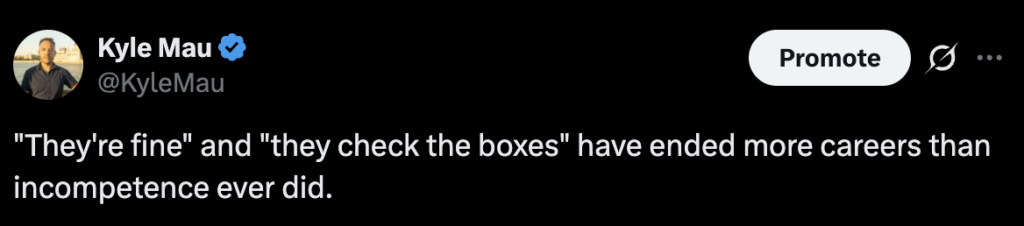
“Fine” is the most expensive word in hiring. Because “fine” doesn’t get fixed. “Fine” doesn’t trigger an alarm. “Fine” just quietly costs you money every single month while you tell yourself it’s working.
I’ve seen agencies limp along with a rotating cast of Upwork freelancers when they clearly need a full-time person. Response times are slow. Quality is inconsistent. Nobody learns the brand because nobody sticks around long enough. They’re spending more on freelancer churn than a dedicated hire would cost.
That’s the ceiling. Freelancers are great at projects. They’re terrible at roles.
And the longer you pretend a role is a project, the more it costs you.
The Question You Should Be Asking Instead
If you landed on this article by Googling “Fiverr vs Upwork,” you’re asking the wrong question.
The right question is:
Do I need a freelancer or a dedicated hire?
If you need a freelancer — someone to complete a defined project with a start and end date — use whichever platform you prefer. Fiverr for speed. Upwork for more control over the hiring process. Both are fine for what they are.
If you need a dedicated hire — someone to fill an ongoing role in your business, learn your brand, grow with you, show up every day — neither platform is built for that. You need an actual person, hired through an actual process, with actual accountability.
We place dedicated hires from Eastern Europe and Latin America at 55-80% less than US equivalents. A full-time Virtual Assistant through HireUA costs $1,200-$1,800/month. A full-time Social Media Manager costs $1,500-$2,500/month. A full-time Developer costs $2,500-$5,000/month.
No platform fees. No proposal sorting. No AI-generated cover letters to wade through. We screen them. We vet them. We place them. If it doesn’t work out, we replace them.
That’s the difference between a marketplace and a service.
Is Fiverr Legit?
Yes. Fiverr is a legitimate, publicly traded company.
The platform itself is not a scam. It processes payments securely, holds funds in escrow until work is delivered, and provides a dispute resolution system.
The question isn’t whether Fiverr is legit.
The question is whether the freelancer you found on Fiverr is any good. And that’s entirely on you to figure out — because Fiverr’s vetting process for standard sellers is basically nonexistent. Anyone can create a profile. Anyone can list a gig. The “Top Rated” badge means they’ve completed a lot of orders, not that they’re actually good at what they do.
Fiverr Pro is the exception — those sellers go through an application and review process. But Fiverr Pro pricing is also significantly higher, which defeats most of the “Fiverr is cheap” appeal.
Is Upwork Legit?
Yes. Upwork is also a legitimate, publicly traded company.
Same deal. The platform is real. The payment system works. The escrow protections exist.
But “legit” and “good” are different things.
Upwork is legit the same way Craigslist is legit — the platform exists, it’s not stealing your money, and some people find great results on it. Others get ghosted, scammed, or stuck with someone who looked great on paper and couldn’t deliver in practice.
The real challenge on Upwork in 2026 is the AI application flood. Candidates are using AI to generate proposals at scale. Hundreds of applications that all look professional, all hit the right keywords, all seem personalized — and none of them are. You’re not reading proposals from humans anymore. You’re reading outputs from machines that are optimized to look like humans.
Sorting through that is your job, not Upwork’s.
FAQ
Fiverr vs Upwork — Which Is Better for Small Business?
Depends on what you mean by “better.” If you need quick, one-off tasks completed cheaply — Fiverr. If you want to hire someone for a longer project and manage the relationship yourself — Upwork.
If you need an actual team member who shows up every day and does the work without you managing them — neither.
Which Has Lower Fees — Fiverr or Upwork?
For the employer, Upwork’s standard fee is up to 7.99% vs. Fiverr’s 5.5%. But Fiverr’s upsell model means the final price is often higher than the listed price. Upwork’s fee is more predictable but stacks with contract initiation fees and other hidden costs.
Neither platform is cheap once you account for everything.
Can I Hire a Full-Time Employee on Upwork or Fiverr?
Technically, yes. Upwork supports hourly contracts and Fiverr recently introduced hourly options for Pro users.
Practically, no. These platforms are designed for project-based freelance work. Using them to hire a full-time team member is like using a dating app to find a business partner. It can happen. It usually doesn’t.
Fiverr vs Upwork for Developers — Which Is Better?
For a one-off development project with clear specs, either works. For ongoing development — building a product, maintaining a codebase, shipping features — you need a dedicated developer, not a freelancer with four other clients.
Fiverr vs Upwork vs Freelancer.com — What’s the Difference?
Freelancer.com is a third option in the same category. It operates on a bidding model similar to Upwork but with a slightly different fee structure (10% or $5 minimum from freelancers, 3% from clients). It has a massive user base (80+ million users across 247 countries) but the same fundamental problem:
You’re still doing all the vetting yourself on a platform full of unvetted strangers.
If you’re choosing between these three, the differences are marginal. The real question is whether a marketplace is the right model for what you need at all.
Is It Worth Paying Upwork’s Higher Fees for Better Quality?
Not necessarily. Higher fees don’t guarantee higher quality on Upwork. The quality depends on who you hire, not which platform you hire them on. Upwork’s “Expert-Vetted” tier does provide better screening, but it’s a premium service that costs more — at which point you’re paying agency-level prices for a marketplace experience.
How Do I Avoid Getting Scammed on Fiverr or Upwork?
Use escrow (both platforms offer this). Check reviews carefully — not just the star rating, but the written reviews and the types of projects reviewed. Ask for portfolio samples that match YOUR project type. And always start with a small test project before committing to anything large.
The best protection isn’t a platform feature. It’s your own judgment.
Final Thoughts
Fiverr and Upwork aren’t bad platforms. They’re fast food.
And sometimes fast food is exactly what you need. Quick. Cheap. Gets the job done.
But if you’ve been eating fast food for every meal and wondering why you don’t feel great — maybe it’s time to consider cooking at home. Or better yet, hiring a chef.
To learn how we work: Click Here.
Read Next: What Is a Virtual Assistant? — Everything You Need to Know