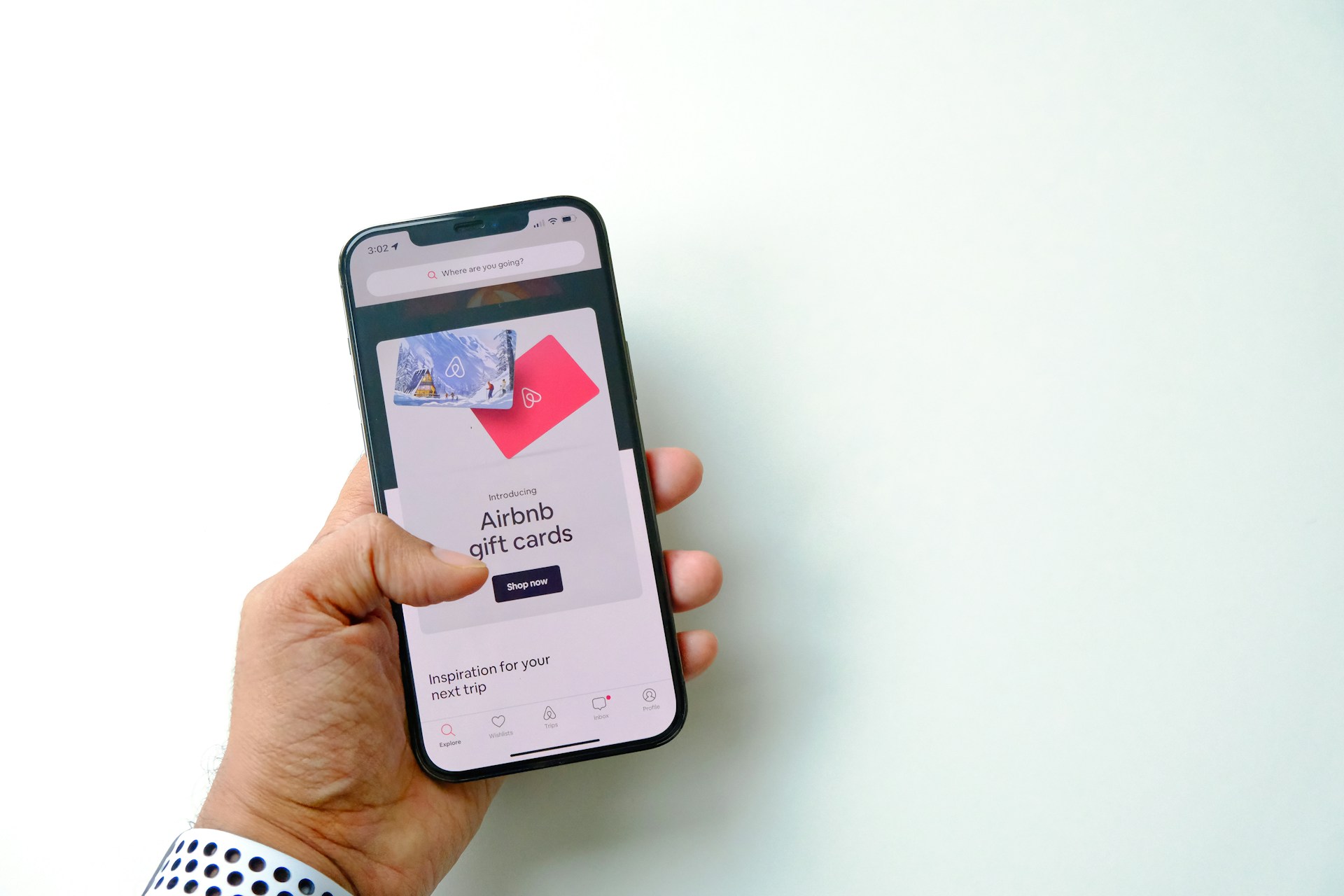

Superhuman is one of the greatest apps ever made. You will achieve the Inbox Zero method every day with it if you so wish.
It’s like a drug. I love it.
And it was one of the worst productivity decisions I ever made.
We’ll get to that. But first, something you should know about the Inbox Zero method before you spend one more minute chasing it:
The guy who invented it says you’re doing it wrong.
Merlin Mann coined Inbox Zero back in the mid-2000s. And according to Mann, the “zero” was never the number of emails in your inbox. It was how much of “your own brain is in that inbox.” Zero attention held hostage. Zero mental real estate rented out to unread messages.
The internet heard “zero” and turned it into a scoreboard.
Empty inbox = winning.
Full inbox = failing.
That misreading built an entire industry. Apps, courses, folder systems, YouTube gurus walking you through their three-folder workflow like it’s a religious rite.
And here’s the thing:
If the inventor of Inbox Zero thinks the empty-inbox version is wrong, why are you still running on that wheel?
I ran on it for years. As a founder, as a CEO, as the guy 1,100+ placements ran through. I chased zero, I hit zero, and I watched zero evaporate before lunch.
So here are 11 reasons the Inbox Zero method is completely flawed — and why you can’t stop doing it anyway.
Table of Contents
- 1. Being Good At Email Is A Punishment
- 2. The Inbox Zero Method Is Dopamine
- 3. Lack Of Judgment
- 4. Email Reminders Are A Graveyard
- 5. Email Is A New Job
- 6. The Inbox Zero Method Doesn’t Focus on Results
- 7. Merlin Mann Denounced His Own Inbox Zero Method
- 8. Scaling = More Emails, Broken Systems
- 9. You Are The Email Bottleneck
- 10. The Opportunity Cost of Too Much Email
- 11. The Right Person Beats A Method
Key Takeaways
- Superhuman and other equivalent offers a dopamine rush but can really make your overall attention and productivity worse in the long term.
- The Inbox Zero method misinterprets “zero” as a literally empty inbox rather than minimal mental clutter.
- Most emails don’t require immediate attention, yet Inbox Zero treats all emails equally, ignoring priority.
- Being good at email often becomes an unpaid job, consuming valuable time that could be spent on more high leverage tasks and getting back time.
- Hiring a good Assistant can drastically improve email management and let you focus on what really matters.
1. Being Good At Email Is A Punishment
This is the rule nobody tells you:
If you’re the most important person in the room, which you often are if you’re the Founder/CEO/Leader in a company, you will ALWAYS be punished for being good at email.
Think about what happens when you reply fast.
The sales guy gets your answer in ten minutes, so he sends the follow-up right back. The vendor learns you respond same-day, so every question comes to you instead of your team. Your Project Manager figures out that emailing you is faster than figuring it out themselves.
You didn’t clear a queue. You fed one.
Email isn’t a pile of work you finish. It’s a faucet spewing water. And getting faster at email doesn’t drain the sink — it opens the tap wider. Every reply you send is an invitation for another one to come back.
The better you get, the more you get. Your competence is the fuel.
A regular employee can win at email. Their inbox has a natural ceiling. But a founder? A CEO? Everyone needs a piece of you. Your inbox has no ceiling, because you ARE the ceiling.
You’re a hamster on a treadmill. Running faster doesn’t get you anywhere. It just spins the wheel harder…and you can’t get off.
2. The Inbox Zero Method Is Dopamine
Now, back to Superhuman.
For about a year, I lived inside that app. Command+K. “Remind me.” Fly through fifty emails in ten minutes. Watch the counter drop. And when you hit zero — a beautiful photo appears on your screen. A reward. A prize.
It felt incredible. I felt like the most efficient man alive. Like Bradley Cooper in Limitless.
I wasn’t being productive.
That prize photo isn’t a design choice. It’s the same mechanic that keeps people parked in front of slot machines in Vegas.
The Inbox Zero Method, gamified like it often is in email apps, results in a variable reward, delivered at the exact moment of completion, so your brain links “clearing email” with “feeling amazing.”
They even created an official “Inbox Zero Day.” A holiday. For emptying your inbox.
And this isn’t the first time.
A decade ago, an app called Mailbox built its entire product around hitting zero — clear your inbox and you got a “You’re all done” message over a pretty picture that changed every time. Millions of people got hooked on that little hit. Dropbox bought the company and shut the whole thing down.
The picture changed. The drug didn’t.
Here’s what should bother you:
Who is this drug marketed to? Not interns. Superhuman’s customers are overwhelmingly founders, CEOs, and executives. The people whose attention is worth the most are being trained to spend it on the activity that’s worth the least.
3. Lack Of Judgment
This is the flaw that actually costs you money.
The Inbox Zero Method measures one thing: The count.
And the count treats every email exactly the same.
The partnership inquiry that could double your business? That’s one email.
The vendor chasing a $400 invoice? Also one email.
Clear them both and the method calls it a win. Two down. Great job.
But those two emails are not the same. One of them needed you within the hour. The other could sit for three weeks and nothing would happen.
A method can’t tell the difference. It has no idea what matters to you, what deal you’re trying to close this quarter, which client is wobbly, or which “quick question” from a stranger is actually a seven-figure opportunity wearing a bad subject line.
Some emails need you NOW. A real deal. A partnership. Something you’re pushing forward this week. Most emails don’t need you at all.
Sorting the first pile from the second requires judgment. And judgment is the one thing no folder system, no filter, and no keyboard shortcut will ever have.
4. Email Reminders Are A Graveyard
“Remind me” features in email are a drugs within a drug.
The ultimate — “I handled it”…but all you did was kick the can down the road 24 hours.
Email comes in. You don’t want to deal with it.
Press Hotkey…remind me tomorrow. Gone. Inbox drops by one. Little hit of satisfaction. Inbox Zero Method complete as per the manual.
I did this dozens of times a day. And every morning, I woke up to the same thing:
A pile of reminders. Yesterday’s deferred decisions, sitting there, waiting. Plus today’s fresh email on top.
I wasn’t processing anything. I was moving it. The threads never closed. Half of them boomeranged back as MORE work, because a five-day-old reply needs an apology attached and the context re-explained.
Snooze, remind, defer, “surface later” — every email app has some version of this now. And they all do the same thing: They let you buy today’s clean inbox with tomorrow’s attention.
That’s not a productivity feature. That’s a payday loan. And like every payday loan, the interest compounds until the pile of reminders becomes a graveyard of things you were definitely, absolutely going to handle.
5. Email Is A New Job

Ask a founder how much time they spend on email and watch them wince.
Two hours a day is normal. Three isn’t unusual. I’ve talked to business owners running multiple companies who spend more time managing email than managing people.
And the Inbox Zero crowd doesn’t fight this. They embrace it. They build folder systems with names like “Processed_2024.” They block three time slots a day for “email processing.” Some of them track their inbox stats on charts — literal charts — celebrating each day they hit zero like it’s a gym streak.
Step back and look at what happened there:
Email was supposed to be a tool. A way to communicate so the actual work could happen. Somewhere along the way, managing the tool became the work.
You started a company to build something. To sell something. To lead people. Nowhere in that vision were you standing at a conveyor belt eight times a day, sorting envelopes into bins.
But that’s the job Inbox Zero gives you. Unpaid. No days off. And you gave it to yourself.
6. The Inbox Zero Method Doesn’t Focus on Results
Here’s a question worth sitting with:
What did hitting zero actually GET you?
Be specific. Did revenue move? Did a deal close? Did a client renew? Did your product get better?
Or did you just feel real good for twenty minutes?
That’s the trap. Inbox Zero delivers a sensation of being on top of things — and sensations are not results. You can hit zero every single day for a year and have moved nothing forward. Emptied, sorted, filed, archived… and completely stationary.
Worse, the feeling is convincing. An empty inbox at 6pm feels like a productive day. It lets you close the laptop with a clear conscience, even if everything that actually mattered is still sitting exactly where it was at 9am.
Busy is not the same as productive. Calm is not the same as progress. And zero is not the same as done.
One of our core values at HireUA is…Real = Results.
If it didn’t get done, it didn’t get done.
Theater is not a result. It does not drive business forward. It’s busywork. Even if it’s work. If the result isn’t there, it doesn’t matter — and I hate to say it, but a lot of email is…exactly this.
7. Merlin Mann Denounced His Own Inbox Zero Method
Remember Merlin Mann from the top of this article?
It gets better.
Mann didn’t just say people misread his idea. He stopped living it. In that same interview, the inventor of Inbox Zero admitted his own inbox is full of clutter. The man who launched a thousand folder systems doesn’t keep his inbox empty. Never really did.
He also walked away from the whole productivity-guru world years ago. He’d watched his idea get twisted into exactly the kind of obsessive optimization content he couldn’t stand — and he wanted no part of it.
Think about what that means.
The founder of the movement looked at what the movement became and said, “No thanks.”
Meanwhile, an entire industry is still selling you his idea. The wrong version of it. The version he specifically said misses the point.
When the man who built the church stops showing up on Sunday, maybe the sermon deserves a second look.
8. Scaling = More Emails, Broken Systems
Here’s the cruel joke buried inside every email system:
They all work — right up until the moment you need them.
At 20 emails a day, any method works. Three folders, two folders, no folders. You could handle 20 emails with a paper notebook and a pigeon.
At 200 emails a day? The system that took you 30 minutes now takes three hours. The folders overflow. The “quick daily triage” becomes a standing appointment that eats your morning. The method didn’t scale. It collapsed.
And what causes email volume to explode?
Success. Growth. More clients, more employees, more vendors, more partnerships, more people who need a piece of you.
So the Inbox Zero method punishes you precisely when you’re winning. Land your biggest client and your reward is 40 more emails a day. Hire five people and each one comes with a daily stream of questions. Grow the company and watch your carefully constructed system get buried under the evidence of your own success.
Any system that gets weaker as you get stronger is not a system worth building your day around.
9. You Are The Email Bottleneck
Every email that waits on you is a decision that waits on…you.
The proposal your team can’t send until you weigh in. The candidate your recruiter can’t move forward until you reply. The client question sitting in your inbox while the client quietly wonders if you’re this slow at everything.
When you insist on personally processing every email, you make your inbox the narrowest point in the entire company. Everything flows through it. Everything queues behind it. Your business moves at the speed of your email stamina — and your email stamina has a hard limit, because you’re a human being who also has to run the company, close the deals, and occasionally sleep.
I’ve written before about how the best Executive Assistants change this equation, and it starts with one uncomfortable admission:
You are the constraint. Not your team. Not your tools. You.
The company doesn’t need you to be faster at email. The company needs you OUT of most of the email entirely, so the decisions that only you can make stop standing in line behind the ones anybody could make.
10. The Opportunity Cost of Too Much Email
Let’s do the math you’ve been avoiding.
Say you spend two hours a day on email. That’s conservative for most founders — plenty spend half their day in it.
Two hours a day, five days a week, is 10 hours a week. Call it 500 hours a year.
Now put a price on your hour. If you’re running a real business, your time is worth $200 an hour at minimum — and if you’re honest about what your selling time or strategy time produces, it’s probably multiples of that.
500 hours × $200 = $100,000 a year.
You are paying yourself six figures to sort mail.
Not to sell. Not to build. Not to lead. To open messages, decide what they are, and move them somewhere else — a task that requires your judgment for maybe 5% of the messages and requires nothing but a pulse for the rest.
Here’s the deal:
A world-class Executive Assistant costs a fraction of that. At HireUA, a full-time EA starts around $3,000 a month — all-in, no hidden fees. Roughly $36,000 a year for someone whose entire job includes taking that $100,000 problem off your plate.
You don’t need a spreadsheet to see how that trade ends.
11. The Right Person Beats A Method
I’ll be honest about something.
Every so often, I resubscribe to Superhuman. I know exactly what it is. I know it’s the slot machine. And when I’ve gone too long without an Assistant running my inbox, I go back for the hit anyway — fly through email for a few weeks, feel amazing, then catch myself checking email nine times a day and uninstall it again.
That relapse taught me the real lesson:
I never crave the app when someone is running my inbox. The craving only shows up when I’m doing email alone.
Superhuman, folder systems, three-block triage schedules — they’re all substitutes.
What you actually want isn’t a faster way to touch every email…it’s for most email to never touch you at all.
That’s what a great Executive Assistant does. Not a folder. Not a filter. A human being with judgment, who learns your business, your priorities, and your voice.
The partnership inquiry gets surfaced to you within the hour — with context attached. The vendor chasing the invoice gets handled without you ever seeing it. The routine requests get answered in your voice, correctly, while you’re in a sales call. And the handful of emails that truly need you arrive with a draft reply already 90% written, so your job is to tweak two sentences and hit send.
Four minutes for what used to eat an hour.
The people bragging about Inbox Zero didn’t beat email. They signed up to play it forever. Every day, forever, sorting envelopes for a prize photo.
You don’t win email.
You hire someone so you can stop playing.
If you’re the fastest email responder in your company and quietly drowning in it, that’s not a flex. It’s a bottleneck with your name on it.
We’ve placed 1,100+ people across 35 countries, and Executive Assistants who take over founder inboxes are one of the most common requests we get. If you want to see what that looks like for your business, book a discovery call — bring your inbox horror stories.
Or start with the 12 mistakes founders make when hiring an Executive Assistant. I made most of them so you don’t have to.