

Everybody wants business growth to look like a straight line from the bottom left of the chart to the top right. More customers every month, more revenue every quarter, more profit every year.
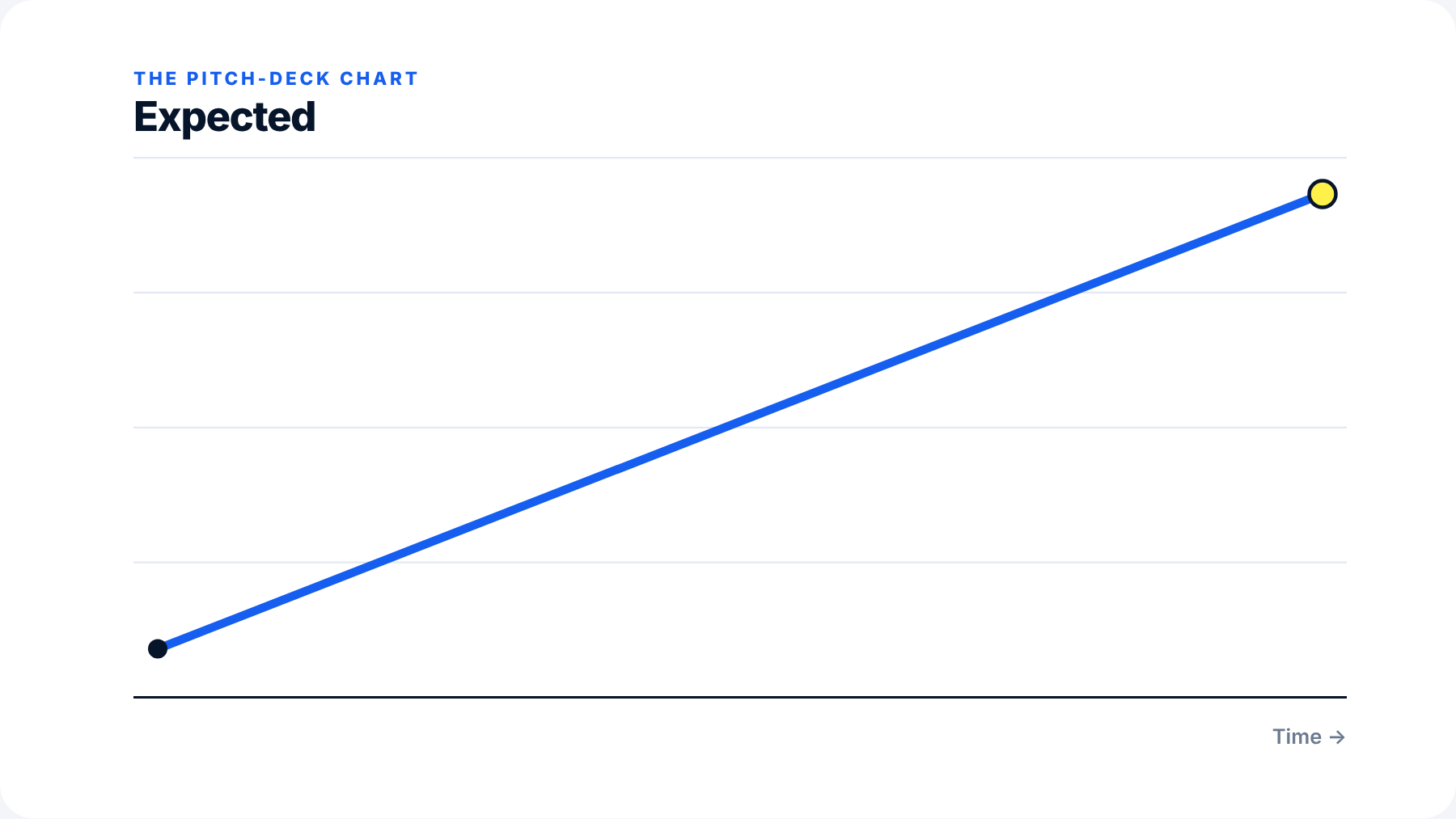
Wouldn’t that be nice.
Here’s what it actually looks like. You’re up 20%, then down 10%. You stay flat for six months. Then you’re up 30%, and then you’re down again. It looks a lot more like a stock chart than the one in the pitch deck. It’s jagged, with peaks and drops and long stretches where nothing seems to happen. Then one day something clicks and you’re off to the races, right up until something breaks.
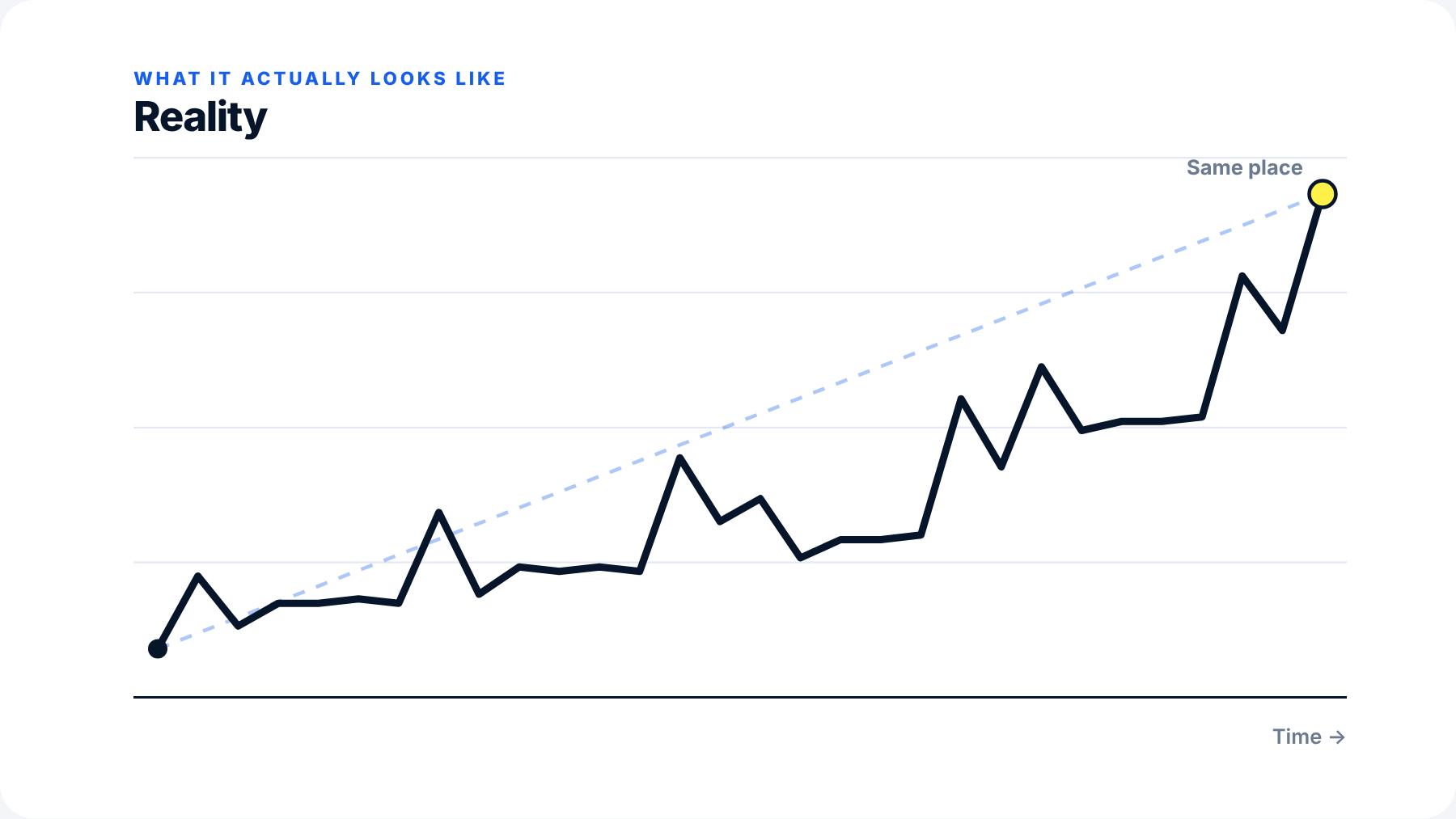
The funny thing is that both lines can end up in exactly the same place. One is a nice little fantasy. The other comes with years of stress, setbacks, and wondering whether you’re doing anything right at all.
I got a very cheap lesson in this on the golf course.
When I picked up golf, it took roughly 40 rounds before I finally broke 100, which is a huge milestone for anyone who’s tried to hit a small white ball where they meant to.
And then?
I went backwards. For the next stretch of rounds I couldn’t even break 110. LOL.
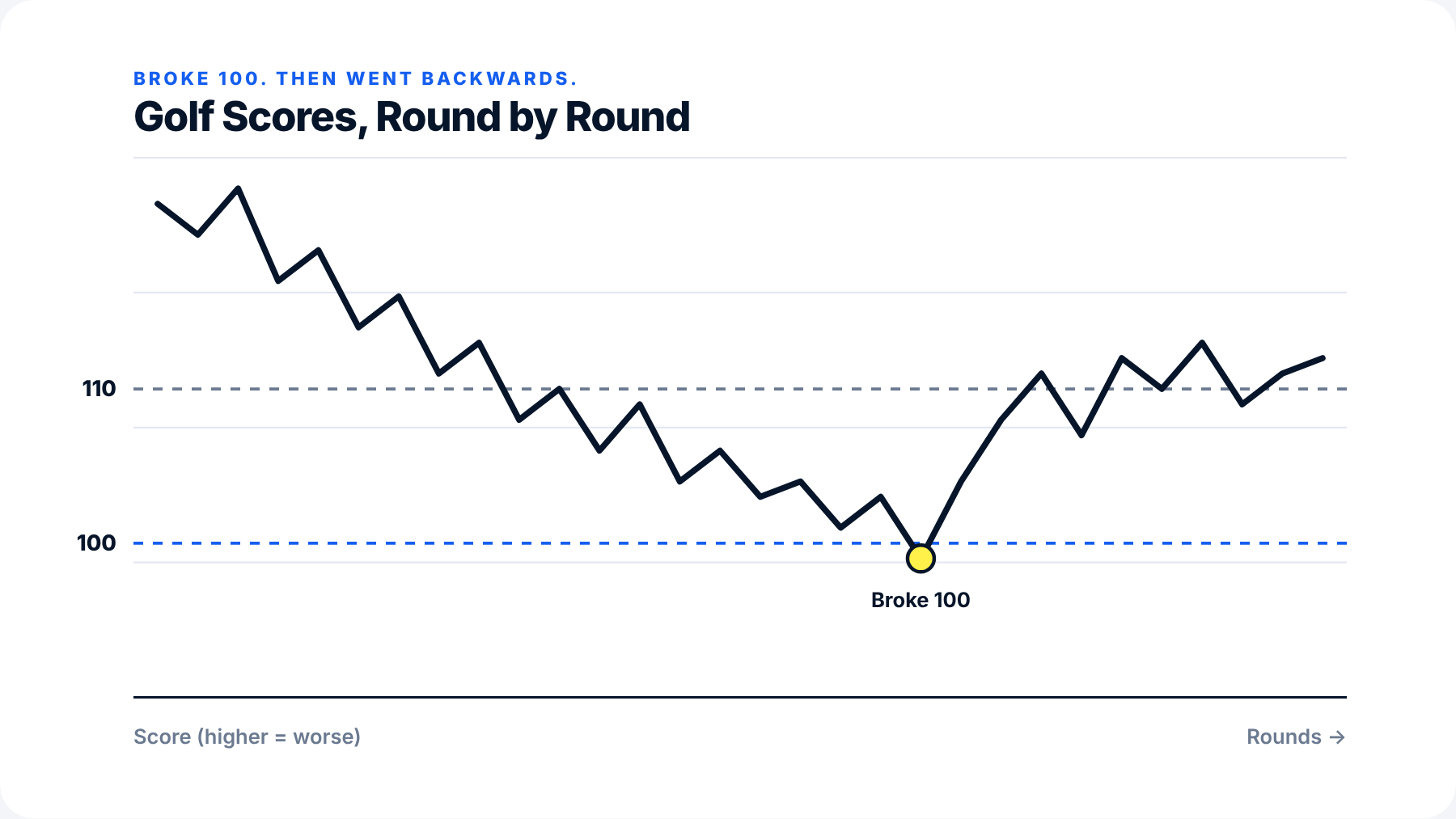
Now, here’s the thing. My scores didn’t show my progress every time I played. You can hit a great shot and get a terrible bounce. You can hit a lousy one and get lucky. Over 100 rounds the better golfer comes out ahead. Over one round, anything can happen.
Business works the same way.
You can do almost everything right and still have a bad month. The sales process works, the team is performing, and the offer is good, but customers just aren’t buying right now. Maybe nobody needs to hire this month. That isn’t a sales problem. It’s timing, and you don’t control timing.
That’s when founders start questioning everything. They have a great month and feel like a genius, then a bad month and feel like an idiot. It’s the same business, the same people, and the same founder, and nothing fundamental has changed. But your brain tells you the whole thing is falling apart, so you panic, change everything, or quit something that was actually working.
Which brings me to the only part you actually get to control.
You can’t control when somebody buys, when the market turns, or whether the ball kicks left off a sprinkler head. You can control the inputs: the calls you make, the people you hire, the practice you put in, and the decisions you make with the information you have. Think of it as a ledger. You keep making the deposits and let the results show up when they show up.
Buddha figured this out a few thousand years ago. And here I am, still relearning it every time I have a bad sales month or a bad round.
So here’s what I’d say about your own chart. Don’t let one bad month talk you out of the right decisions. Progress is cumulative. Results are volatile.
And if one of your inputs is putting the right person in the right seat, at a cost that doesn’t make every bad month scarier, that’s exactly what we do.
Book a call here: