
Pixel-perfect.
You’re about to say it… Maybe you already have.
You’ve got the Figma.
It looks incredible.
And when you go to hire a Front End Developer, that’s the ask: Match the design.
Exactly.
Pixel-perfect.
And I get it… It’s not your fault.
The design is the part you can see — So it’s the part you know how to ask for.
But here’s what nobody tells you before you hire: Pixel-perfect is the floor.
It’s the easiest part of the entire job.
And if it’s the only thing you screen for, you’re going to hire someone who nails the screenshot and ships you a site that quietly doesn’t work.
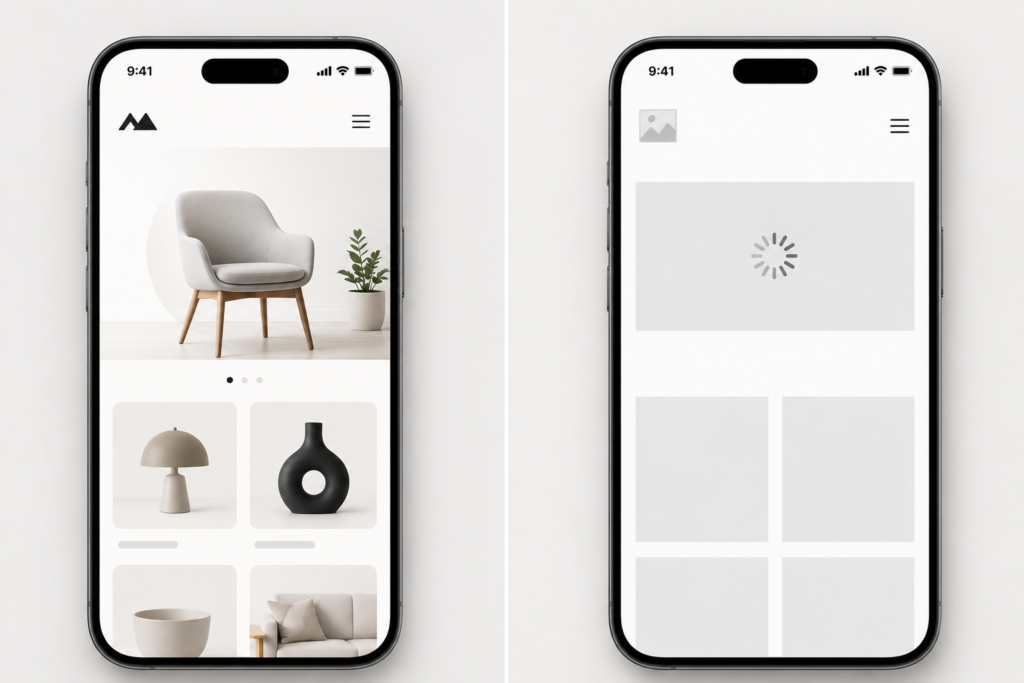
- It’ll look exactly like the design
- It’ll load like molasses on a phone
- It’ll break on Safari
- It’ll buckle the second real product data hits it instead of the 3 clean rows in the mockup
None of that was in the Figma.
So none of it was in your screening.
I run a staffing agency that’s made 1,100+ placements across 35 countries, and Front End Developers are one of the roles where I watch smart founders get burned in the exact same spot, over and over.
This article is about that spot.
What a Front End Developer actually does, why the part you can see is the part that matters least, and how to judge one without reading a single line of code.
Because you can’t read code.
And by the end of this, you’ll understand why that’s fine.
TLDR
- Pixel-perfect design is just the starting point when you hire Front End Developer; the real challenges lie in functionality and performance.
- Assume that front-end work is only about translating Figma designs; you’re ignoring the crucial aspects of user interactions and system behavior.
- Differentiate between Front End Developers, Web Designers, and Graphic Designers to avoid hiring mistakes.
- Focus on candidates’ proficiency in HTML, CSS, and JavaScript; understanding of frameworks like React and Vue is also essential.
- Evaluate developers based on tangible outputs rather than aesthetics, emphasizing performance and adaptability under real-world conditions.
Table of Contents
- What a Front End Developer Actually Does (It’s Not What You Think)
- Front End Developer vs. Web Designer vs. Graphic Designer
- What Languages Should a Front End Developer Know?
- Pixel-Perfect Used to Be the Hard Part. Now It’s the Commodity.
- The Moment the Invisible 90% Starts Costing You Money
- You Can’t Read Code. Good. Stop Trying.
- How We Actually Screen Front End Developers
- Freelance vs. Dedicated: Which One Do You Actually Need?
- Where to Find Front End Developers (And What They Cost)
- The One-Year Guarantee
- Front End Developer FAQ
- The Bottom Line
What a Front End Developer Actually Does (It’s Not What You Think)
Let’s clear up the 2 assumptions that cause most of the damage.
Assumption 1:
“Front end is just turning the Figma into a website.”
That’s 10% of the job.
The visible 10%.
Taking a static design and producing static HTML that looks like it?
That part has been commoditized — AI builders do it in minutes now.
We’ll get to that.
The other 90% is everything that happens after the pixels:
- What happens when someone clicks
- What happens while the data loads
- What happens when the data doesn’t load
- What the page does on a slow connection, on a cracked Android, on Safari (which breaks things Chrome doesn’t — every Front End Developer alive has a Safari scar)
- What happens when your product catalog has 500 items instead of the 3 in the mockup
- Whether the checkout still works when someone’s name has an apostrophe in it
None of that is visible in a screenshot…
All of it is the job.
Assumption 2:
“A back end developer can do this. It’s all code, right?”
No — And this one costs people real money…
Think of your website as a house.
Back end is the plumbing and the wiring: Servers, databases, the logic that runs behind the walls.
Front end is every room you actually stand in — and everything that happens when you flip a switch, turn a faucet, open a door.
Different trades. Same house.
Can a back end developer build your front end?
Some can.
The way a plumber can wire your outlets…
It’ll technically function but it’ll also be janky, break on mobile, and feel wrong in ways you can’t articulate but your customers can feel.
“Full-stack” developers exist.
Most of them lean hard one direction and are mediocre in the other.
When you hire a Full-Stack Developer for front-end-heavy work, ask which side they actually live on.
The answer is usually the back.
If the visible layer of your business is where the money happens — and if you sell anything online, it is — you want someone whose entire trade is that layer.
Front End Developer vs. Web Designer vs. Graphic Designer
3 job titles.
People use them interchangeably.
They are 3 different humans, and hiring the wrong one is one of the most common mistakes I see.
1. The Graphic Designer
Makes visual assets:
- Logos
- Brand systems
- Ad creative
- Social graphics
They live in Illustrator and Photoshop.
Most of them cannot design a functional website, and none of them can build one.
2. The Web Designer
Designs the website itself.
They decide what goes where, how a visitor moves through the page, what the experience feels like.
Their deliverable is the Figma — the blueprint.
If you don’t have a design yet, this is your first hire, not the developer.
(I wrote a full guide on how to hire a Web Designer, including the $20,000 lesson it took me to learn the difference.)
3. The Front End Developer
Takes that blueprint and makes it real.
Working, clickable, fast, alive on every device.
Here’s the test:
If you hand them a blank page and say “make it look good,” you need a Web Designer.
If you hand them a finished Figma and say “make it work,” you need a Front End Developer.
Hand a developer a blank page and you’ll get something functional and ugly.
Hand a designer your Figma and ask for a website, and you’ll get a Webflow page held together with duct tape — or an eighteen-month disaster like mine…
One person who does both at a high level exists.
I’ve placed a handful in 1,100+ placements.
Plan on 2 people, and be pleasantly surprised if you find the unicorn.
What Languages Should a Front End Developer Know?
You’ll see a wall of acronyms on every resume.
Here’s the two-minute version so none of it intimidates you.
The non-negotiables:
- HTML — the structure
- CSS — the appearance
- JavaScript — the behavior
A Front End Developer who is weak in any of the 3 isn’t a Front End Developer.
The frameworks:
- React, Vue, and Angular are the big three — tools built on top of JavaScript that make complex interfaces manageable.
- React dominates the market.
- Vue has a loyal following and a gentler learning curve.
- Angular mostly lives inside large enterprises.
Here’s what actually matters for your hire: Match the developer to your stack, not to the longest list.
- If your site runs on React, hire a React person.
- If you’re on Shopify, you want someone who knows Liquid, Shopify’s template language — I wrote a full article on hiring Shopify Developers because that’s its own world.
- If it’s WordPress, you want someone who’s lived in WordPress themes, not someone who’ll treat your site as a chance to learn.
And a warning from the screening trenches:
The longer the list of technologies on a resume, the more suspicious you should be…
A developer who claims expert-level React, Vue, Angular, and six other tools is usually a tourist in all of them.
The strong candidates list one framework and go deep.
One more distinction, because the job titles blur:
A JavaScript Developer is not automatically a Front End Developer… JavaScript runs on servers too.
I wrote about why “JavaScript Developer” is one of the emptiest titles in hiring — always ask which side of the stack someone actually lives on.
Pixel-Perfect Used to Be the Hard Part. Now It’s the Commodity.
Here’s the uncomfortable truth about the thing everyone screens for:
10 years ago, faithfully translating a design into a working page was a real skill. It separated professionals from pretenders.
Today, an AI page builder does it in an afternoon…
You paste in a design, it spits out code, you slap it on your site, and it looks… pretty much like the design.
So let me be straight with you, because most agencies won’t: Sometimes the AI builder is enough.
If you’re running a simple funnel — a landing page, an opt-in, organic traffic, nothing dynamic — the builder will probably get you there.
Save your money.
I’d rather tell you that now than have you find out after paying someone. But notice what just happened to your hiring criteria.
If a machine can produce pixel-perfect, then pixel-perfect no longer separates anybody.
The candidate who nails your Figma test proved they can do the thing software already does for free.
You screened for the commodity.
The 90% you can’t see — the part that determines whether the thing actually works — never got tested at all.
That’s the trap… and it snaps shut at a very specific moment:
The Moment the Invisible 90% Starts Costing You Money
Here’s when the builder stops being enough, and when a mediocre hire stops being survivable:
The moment you start paying for traffic.
If you’re spending $1,000 a day or more on ads, your front end isn’t a brochure anymore…
It’s the conversion machine.
Every visitor is a visitor you paid for.
And here’s the brutal part: Front end failures are silent.
A page that loads 1 second slower doesn’t throw an error.
A checkout that dies on iOS Safari doesn’t send you an email…
A form that fails on mobile doesn’t show up in any report you’re looking at.
What shows up is a worse ROAS.
And what do you do when ROAS drops?
- You blame the creative.
- You blame the audience.
- You blame the offer.
- You rebuild the campaign.
Nobody audits the front end.
Because it looks perfect.
It matched the Figma, remember?
You paid for every one of those visitors — And the invisible 90% of your front end is quietly taxing every single click.
That’s why pixel-perfect fixation is a disease.
Not because wanting a faithful build is wrong — you should want that.
But because it trains you to grade the one layer that can’t hurt you, and ignore the layer that’s bleeding you out.
You Can’t Read Code. Good. Stop Trying.
Now the part where most founders freeze.
“Okay, so the real quality is in the code. But I can’t read code. So how do I know if a developer is any good?”
Here’s my answer, and it’s going to sound backwards:
Stop trying to judge the code.
You’ll lose that game every time.
Trying to evaluate code you can’t read is how non-technical founders end up nodding along to confident-sounding nonsense and hiring the best talker instead of the best builder.
Refuse that game.
Play the one you can win.
Because here’s what makes Front End Development different from every other technical role you’ll ever hire for: It’s the only developer role where the quality leaves fingerprints you can see.
You cannot look at a database and know if it’s built well.
You cannot inspect an API and spot the problems.
— Back end quality is invisible to you, full stop.
— Front end quality shows up in the real world.
In ways you can measure yourself, today, without asking anyone’s permission:
Speed is a number.
Run any page through Google’s free PageSpeed tool.
You get a score.
A senior Front End Developer’s work and a hack job produce very different scores on the same design.
Devices don’t lie.
- Open the site on your phone.
- Open it on your spouse’s phone.
- Open it in Safari.
Does it break? You just did more quality control than most hiring processes.
Real conditions expose everything.
- What happens on hotel wifi?
- What happens with 500 products instead of 3?
- What happens when the form gets a weird input?
A page built by a professional degrades gracefully. A page built to match a screenshot falls apart.
You don’t need to know how the car was built.
You need to drive it.
On a bad road… In the rain… With passengers…
The screenshot is the glamour shot.
You’re allowed to demand the test drive.
How We Actually Screen Front End Developers
At HireUA, every candidate goes through a 100-point scoring rubric before a client ever sees them.
Front End Developers get scored the same way — with one difference from how everyone else in the industry does it:
We screen on outputs, not vibes.
- Not “walk me through your resume.”
- Not “rate your React skills out of 10.”
- Not trivia questions a candidate can rehearse.
Real work.
Measured against real baselines.
The kind of task that a pixel-perfect specialist fails and a real Front End Developer clears without breaking stride — because the task is designed to expose exactly the invisible 90% this whole article has been about.
- Which task?
- What baselines?
- What are the numbers that separate a pass from a kill?
The answer isn’t one-size-fits-all.
The task and the thresholds change based on what you’re building, what you’re spending, and what failure costs you.
A Shopify store doing $50K a month in paid traffic needs a different screen than a SaaS dashboard.
A generic checklist would do to you exactly what this article is warning you about: Give you something that looks right and doesn’t hold up.
What holds true across all of them is that the method exists, it doesn’t require you to read code, and we run it on every placement.
If you want it pointed at your hire, that’s a conversation.
Freelance vs. Dedicated: Which One Do You Actually Need?
Before you go looking, decide what you’re hiring for.
Because “hire a Front End Developer” means 2 different things, and the platforms selling you freelancers won’t tell you the difference.
Hire a freelancer when the work has an ending.
A landing page.
A redesign with a finish line.
A Figma-to-site build you’ll touch twice a year afterward.
Project-based, scoped, done.
Freelance platforms are full of Front End Developers who do exactly this, and for truly finished projects it works.
Hire a dedicated Front End Developer when the work never ends.
And if you’re running paid traffic, the work never ends.
New landing pages for every campaign.
Ongoing speed work.
A/B test variants.
The endless little breakages that appear every time a browser updates or a plugin ships.
Here’s the trap with using freelancers for never-ending work:
— Every task becomes a negotiation.
— Every fix waits behind their other clients.
And the freelancer who built your site last spring has zero memory of it by fall — you’re paying them to re-learn their own work.
A dedicated developer carries the context.
They know why the checkout is built the way it’s built. They see the problem coming instead of billing you to discover it twice.
The math surprises people:
A dedicated full-time Front End Developer from the markets below often costs less per month than what businesses burn in ad-hoc freelancer invoices — and you get 160 hours instead of a queue.
Where to Find Front End Developers (And What They Cost)
The talent conversation, quick and straight.
US-based: Senior Front End Developers run $120K-$160K+ a year, plus benefits, plus the recruiting gauntlet of competing with tech companies for them.
The offshore markets we place from:
1. Eastern Europe (Ukraine, Poland, Romania):
This is where I built my business.
The engineering culture is deep — these are developers trained in rigorous programs who’ve spent years building for Western product companies.
On Djinni, Ukraine’s main tech job board, mid-level React developers list at $1,500-$3,000 a month, and senior developers around $3,500 — with Western-remote roles running a premium above that.
Do the math against a US salary.
It’s not close.
2. Latin America:
Time zone overlap is the selling point. Your developer is online when you are.
Rates land in a similar band to Eastern Europe, with the strongest React talent in Brazil, Argentina, and Mexico.
3. Philippines:
The most affordable of the 3, and home to strong front end talent — but the pool skews toward WordPress, Shopify theme work, and marketing sites more than complex application front ends.
For an ecommerce build, often exactly right.
For a heavy SaaS interface, we usually look at the other 2 regions first.
Every market has stars and every market has pretenders producing 40 layers of nested garbage behind a pretty screenshot.
The region tells you the price.
The screening tells you which one you got.
The One-Year Guarantee
Here’s how confident we are in screening on outputs instead of screenshots:
Every HireUA placement comes with a one-year replacement guarantee.
Your Front End Developer doesn’t work out — for any reason — we replace them.
Free.
No agency puts a year on the line for a candidate they screened with a resume skim and a vibe check.
We can, because by the time a developer reaches you, they’ve cleared a bar that has nothing to do with how well they talk and everything to do with what their work does under pressure.
Front End Developer FAQ
What’s the difference between a Front End Developer and a Back End Developer?
Front end is everything that runs in your visitor’s browser: What they see, click, and experience.
Back end is everything behind the walls: Servers, databases, the logic that processes orders and stores data.
Different trades.
A strong hire in one is usually mediocre in the other, whatever the resume says.
What’s the difference between a Front End Developer and a Web Developer?
“Web Developer” is the umbrella.
A Front End Developer is a Web Developer who specializes in the browser side.
When a small business says “I need a Web Developer,” a front-end-leaning person is usually what they actually mean — most small business websites are 90% front end with a thin layer behind them.
How much does it cost to hire a Front End Developer?
- US senior talent: $120K-$160K+ a year plus benefits.
- Eastern Europe: Roughly $1,500-$3,000 a month for mid-level, around $3,500+ for senior.
- Latin America: A similar band with US time zone overlap.
- Philippines: The most affordable, strongest for WordPress and ecommerce front ends.
A dedicated offshore Front End Developer typically runs 25-40% of the fully-loaded cost of the equivalent US hire.
Can’t AI just build my front end now?
For a simple static page, sometimes yes — and I’ll tell you that on a call before taking your money.
But AI builders produce the visible 10% — They don’t handle performance under real traffic, cross-browser breakage, or what happens when real data hits the page.
The more your revenue depends on the site, the faster the builder’s ceiling shows up.
Should I hire a junior Front End Developer to save money?
Only if someone senior is there to catch their mistakes.
A junior with no one reviewing their work isn’t cheaper — the cost just moves downstream, into rebuilds and silent conversion leaks.
If this is your first and only developer, hire senior enough to be trusted alone — That’s also the seniority level where our screening earns its keep.
Do I need a Front End Developer or a full website agency?
If you need strategy, design, and build from scratch, an agency bundles it — at agency prices, on agency timelines.
If you have the design (or an existing site that needs ongoing work), a dedicated Front End Developer gives you the build capacity without paying an account manager’s salary inside every invoice.
How long does it take to hire one?
Doing it yourself: Plan on 4-8 weeks of sourcing, screening candidates you’re not equipped to evaluate, and hoping.
Through us: We typically present screened candidates within days, because the pipeline and the 100-point rubric already exist.
Then you talk to finalists and pick.
The Bottom Line
You’re going to say pixel-perfect.
Fine… Say it.
You should get pixel-perfect — as the floor, not the finish line.
But now you know what’s underneath the screenshot: The 90% you can’t see, failing silently, taxing every click you paid for.
And you know you don’t need to read code to catch it.
You need someone who screens for what the work does instead of what it looks like.
That’s what we do.
1,100+ placements.
35 countries.
One-year guarantee.
Book a discovery call and tell us what you’re building.
We’ll tell you whether you even need the hire — and if you do, we’ll find you a Front End Developer whose work holds up after the screenshot.