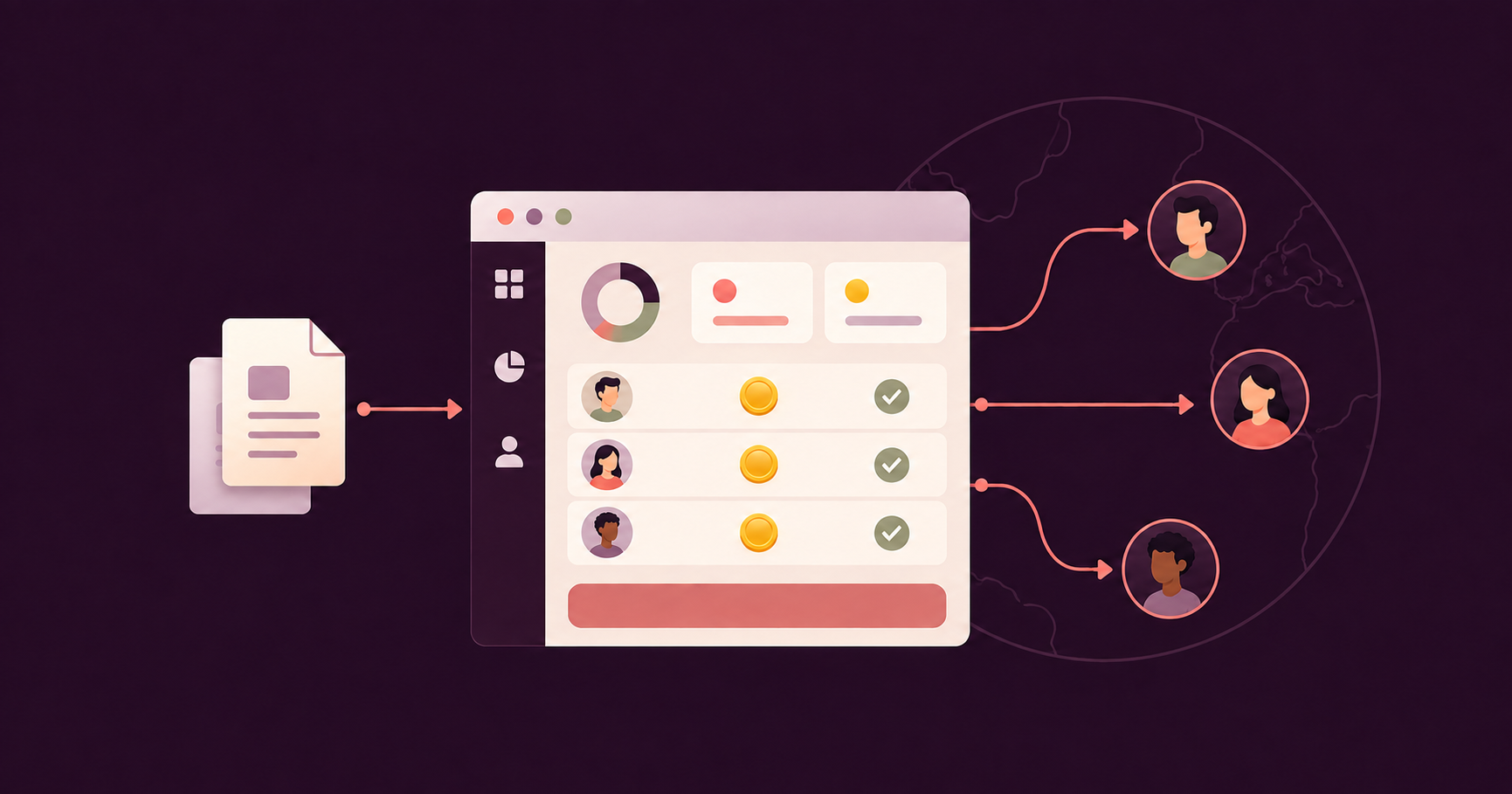

In 2019, I founded a DTC olive oil company — Selo Olive. Picture the version of me that bottled olive oil in a garage…
- Filling bottles by hand
- Taping boxes shut
- Loading them into the back of a car
- Driving the whole run to the post office and standing in line behind somebody mailing a birthday card
That was fulfillment for the DTC olive oil brand I co-founded and later exited — single-estate extra virgin from Croatia, sold through our own Shopify store.
And it was eating us alive.
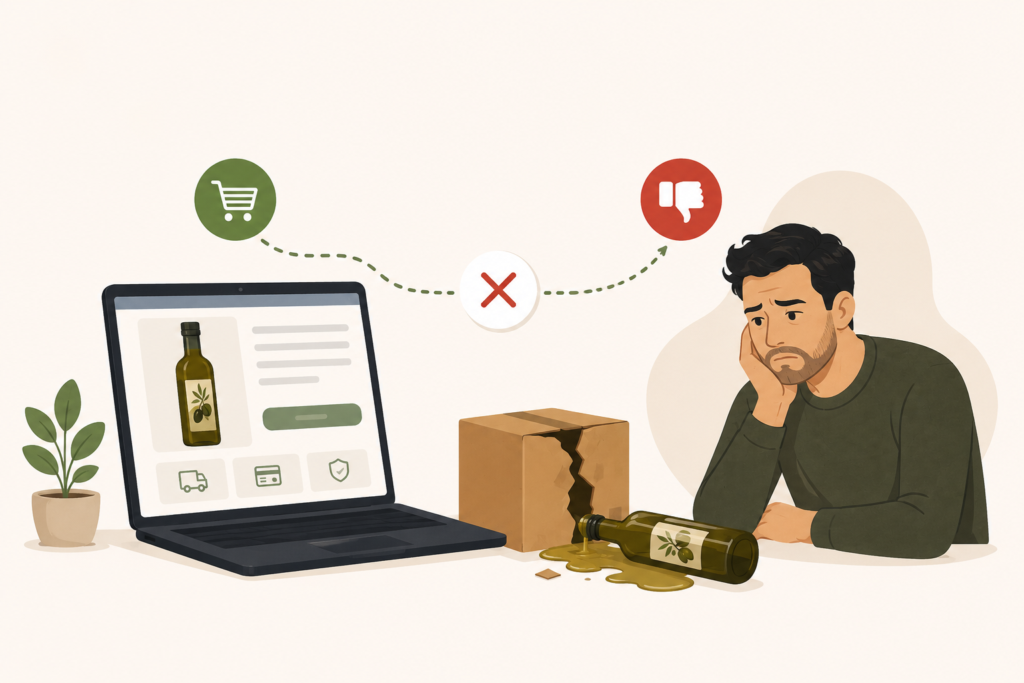
The volume climbed.
Bottles broke in transit.
The shipping fees were brutal.
And every hour I spent taping a box shut was an hour I wasn’t spending on the part of the business that grew it.
That’s the trap nobody warns you about when you open an ecommerce store.
You didn’t start a store to become its warehouse, its help desk, and its night-shift content team.
But that’s exactly what happens…
- The orders come in
- The tickets pile up
- The to-do list never ends
- And slowly, quietly, you become the bottleneck holding the whole thing together
So you start looking for a way out…
Some way to hand the weight to someone else.
That search has a name: Ecommerce outsourcing.
This is the straight map of what to hand off — and what to keep.
From someone who’s done it from both chairs: the founder taping boxes in a garage, and the guy who’s now placed 1,100+ people into companies that look a lot like yours.
TLDR
- Ecommerce outsourcing helps relieve founders from the burdens of fulfillment and customer service.
- Physical fulfillment goes to 3PLs, while digital operations require dedicated help for customer service, ops, and creative tasks.
- Avoid mixing roles; hire specialized people for each distinct function to prevent mediocrity.
- Assess your workload; hire when you can fill half a person’s day with meaningful tasks.
- Invest in quality hires; the cheapest option often leads to higher costs in the long run.
Table of Contents
What Ecommerce Outsourcing Really Means
Most “Ecommerce outsourcing” guides are written by one of two companies.
A call center that wants to sell you a call center.
Or a 3PL that wants to sell you a warehouse.
Each one defines “outsourcing” as whatever they happen to be selling that day.
Here’s the version nobody with something to sell will give you.
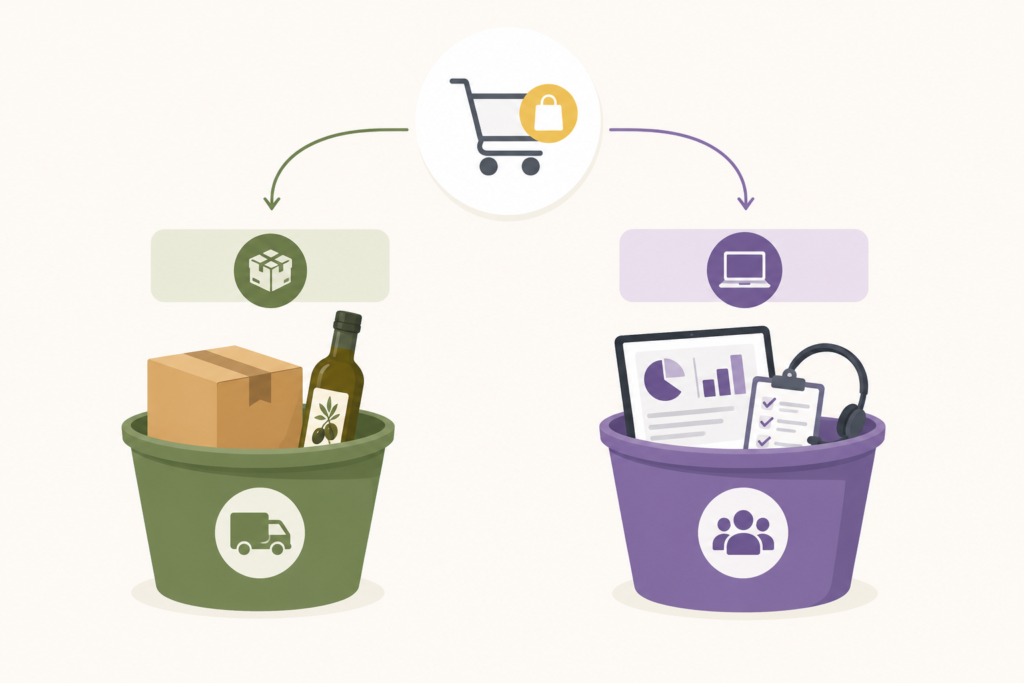
Ecommerce outsourcing splits into 2 buckets, and they could not be more different.
1. Physical / in-person — anything that touches an object.
- Storing inventory
- Picking, packing, shipping
- Processing the physical return when the box comes back through the door
2. Digital operations — anything that happens on a screen.
- Answering the customer
- Updating the listing
- Editing the video
Nobody lifts a box.
You hand these 2 buckets to completely different kinds of help.
Mix them up and you’ll either pay a fulfillment warehouse to do customer service — badly — or ask a Virtual Assistant to ship pallets, which they can’t.
Let’s take them one at a time.
Physical Fulfillment — Get a 3PL
Start with the physical, because it’s the easiest to hand off and the fastest relief you’ll ever feel.
When the olive oil brand outgrew the garage, we moved fulfillment to a 3PL — a third-party logistics company — ShipBob, in our case.
They hold your inventory in a warehouse.
An order comes in, they pick it, pack it, ship it.
You never touch a bottle again.
It was the right call — net positive, full stop.
I’ll tell you the setup, because it’s a lesson by itself.
Our bottles got filled in California, then shipped to a ShipBob warehouse in Chicago to be fulfilled from there.
My co-founder set it up that way.
It is not how you’d draw it up on a whiteboard — you’re paying to drag heavy liquid across the country before it even reaches a customer.
The clean version bottles closer to the source.
But here’s the thing: Even a clumsy 3PL setup beat the founder taping boxes in a garage.
Because no founder should be running a warehouse out of their own house.
Long term it’s not feasible.
It’s not even close…
And here’s where I’ll tell you something the other “ecommerce outsourcing” companies won’t:
The physical bucket is not what we do.
We place people, not pallets.
If you need a warehouse, you need a ShipBob or a regional 3PL, and I’ll happily point you toward one.
I’m saying that up front because the moment we hit the digital bucket, that’s where most people light money on fire — and that’s the part we live in.
When Do You Hire A 3PL?
Sooner than you think.
Some people wait until they’re packing 2 hours a day and the packing has become the thing stopping them from growing.
Others move at a few dozen orders a month because they want their apartment to be a home again instead of a stockroom. Or the spouse wants it. You know how it goes 🙂
There’s no magic order count.
The trigger is the day you realize the box-taping is costing you more in lost growth than the 3PL fees would ever cost you in cash.
That’s ecommerce outsourcing working exactly the way it should.
Get the boxes off your plate.
Then let’s talk about the part that’s harder to get right.
Digital Ecommerce Operations — Where the Real Decisions Live
Everything else in ecommerce outsourcing happens on a screen, not in a warehouse.
And it breaks into 3 jobs that people constantly cram into one.
Customer Service
The inbox that eats your life…”Where’s my order?”
(For the 100th time this month)
The refund request at 11pm.
The furious one-star review you’ve got 20 minutes to defuse before it gets screenshotted and posted.
This is almost always the first thing founders hand off, and for a good reason — it’s the loudest, the most draining, and it doesn’t grow the business.
It just keeps it from falling apart.
It’s also where a bad hire does the most damage.
One robotic reply to an already-angry customer turns one problem into two, and now you’re issuing a refund you wouldn’t have had to issue.
I’ve written the full screening breakdown in the Ecommerce Virtual Assistant guide and the Shopify Virtual Assistant guide.
The short version: you’re not hiring for software knowledge.
You’re hiring for judgment under pressure.
Everything else is trainable.
Operations & Admin
The operational backbone.
- Product uploads
- Order processing
- Inventory updates
- Returns
- Data entry
The unglamorous machinery that keeps the store from seizing up.
This is the work that fills the rest of a Virtual Assistant’s day once the tickets are handled.
On most small stores, customer service and ops are the same person — and that’s exactly right, for a reason I’m about to get to.
Creative
The newest bucket, and the one growing fastest.
DTC brands now live and die on content — UGC ads, product videos, the stuff that makes a thumb stop scrolling.
That means Video Editors, Web Designers, and the people who run your social — the ones who turn raw phone footage into something that sells.
And creative is where the “easy to hand off” rule breaks.
Editing tickets is the same on every store.
Editing a brand’s UGC is not.
It takes taste, reference, and a feel for your specific voice.
This is the bucket where you’ll get burned if you hand it off before you know what good looks like for you — which is exactly why it sits at the bottom of the ladder, not the top.
Which brings us to the real question underneath all of this.
Not what to outsource.
How much of a person you can actually keep busy.
The 8-Hour Day for 30 Minutes of Work
Here’s the contradiction almost every store owner walks in with, and most of them haven’t put it into words yet.
This is the part of ecommerce outsourcing nobody explains before you sign a contract.
You want someone there all day…
- Ready the second a ticket lands
- Fifteen-minute response time, even at 9pm
- And you want to pay them for the 30 minutes they’re actually typing
- On call for pennies
That’s renting a fire department for the price of a smoke detector.
A fire department doesn’t park a truck in your driveway and idle there waiting for your kitchen to catch.
They cover 10 thousand homes at once.
Nobody pays a firefighter to stand by your stove on the off chance it flares up.
The only reason they show up in 4 minutes is that an entire city funds them to sit ready — Always on.
Paid around the clock by everyone, so they’re available to anyone.
So pick your version.
You want someone whose whole attention is your store — instant, dedicated, yours — then you’re buying their day.
The full day.
Not just the 30 minutes with a siren on it… The 7 and a half hours of quiet too.
Or you go cheap and part-time, and that person is split across 4 other stores.
Which means your “urgent” ticket waits behind somebody else’s urgent ticket.
Your SLA isn’t yours.
It’s whatever’s left over.
What you cannot buy is exclusive, instant, and thirty-minutes-of-pay.
That person doesn’t exist.
And anyone who sells them to you has already oversold that same hour to 4 other people — and you’re the fifth.
The Half-Day Test
So before you hire, the test is simple…
Can you fill at least half their day with work that already exists?
Not “will exist someday.”
Exists.
Tickets are 30 minutes — what’s the other three and a half hours?
- Product uploads
- Inventory
- Posting the promo
- Pulling the weekly report
- The graphic you need by Thursday
Stack the real recurring work and see if it adds up to a half-day a person could actually show up to.
If it does, you don’t have a ticket problem.
You have a “you’re the operational backbone of your own store” problem.
That’s a real hire.
And it’s why a store this size hires one Virtual Assistant across tickets, ops, and the odd graphic — not 3 specialists.
One person.
One full day.
One SLA you can actually hold them to.
If it doesn’t add up to half a day, you’re not ready.
Automate the tickets and come back when there’s a day to fill…
Can You Fill the Day?
One more rule before you post the job.
You don’t need to be an expert.
But you need one of the thing.
- One FAQ in the doc before you hire a Customer Support Rep
- One UGC video on file before you hire a Video Editor to make more of them
- One defined task before you hand someone a calendar
Drop a support person into an empty knowledge base and watch them guess wrong at your customers all day long — that frustration is yours, not theirs.
And here’s the part nobody says out loud…
A lot of this is just not wanting to do the damn work.
You want the store, the remote freedom, the money landing while you’re at the beach — and you want to hand off the boring parts for pennies.
That’s the dream everybody’s selling you.
You can’t have all of it — If you won’t pay for someone’s full day, the work is yours.
If you’ve truly got 30 minutes of tickets and nothing else, then you do the 30 minutes.
You don’t get to work 2 hours and stick a stranger with an SLA you’d never hold yourself to.
So audit your own day before you blame the hire.
What are you doing for those 8 hours?
Because if the answer is “not much,” the problem was never the tickets.
Fill the Day, Don’t Frankenstein the Job
So you stack the work to fill a day.
Good.
But there’s a way to do that wrong, and it’s the single most common mistake in ecommerce outsourcing.
Filling a day with same-tier work is smart.
- Tickets
- Uploads
- Inventory
- Posting a promo
- Occasional graphic
— that’s one skill band.
One Virtual Assistant.
One reasonable salary.
Stacking 5 different professions onto one seat is not.
The second you add PPC strategy, email marketing, product photography, and inventory forecasting to that same person, you haven’t hired a Virtual Assistant.
You’ve hired a Customer Support Rep, a Media Buyer, an Email Marketer, a Photographer, and an Operations Manager — 5 jobs at 5 price points — and you’re paying one VA salary for all of it.
Then you’re shocked when they’re mediocre at every one.
Match the volume to a dedicated person.
Match the work to one role’s skill band.
Fill the day.
Don’t Frankenstein the job.
If you can’t say the role in one sentence, you’re not ready to post it.
And if your sentence runs 40 words long, you don’t need one hire.
You need 2.
The Book Everyone Quotes (and Where It Leaves You)
There’s a book that comes up every single time this conversation happens.
If you’ve read anything about outsourcing, someone has told you to read it.
It’s fine.
The core idea holds up — your time has a dollar value, you should stop doing low-value work, hand off the stuff that drains you and keep the stuff that lights you up.
There’s a matrix.
There’s an energy audit.
Useful enough.
Here’s the problem: It walks you right up to the most important decision — and then stops.
It tells the founder of a real company “your time is worth this much, now go hire an assistant to do these things.”
And it says almost nothing about how to hire the right one — Which, if you’re running a business that’s already working, is the entire ballgame.
Because the assistant who saves your life and the assistant who torches your reputation in 90 days cost about the same on paper.
They interview about the same.
The difference between them is the one thing the book skips — and it’s the difference between getting your time back and running the whole hunt again in 3 months.
That gap — between “you should outsource” and “here’s how to hand it to the right person” — is the whole reason we exist.
How HireUA Fits
Here’s what we do, in one sentence.
We find, vet, and place the dedicated people who run the digital side of your store — customer service, ops, creative — so you stop being the operational backbone of your own business.
Not a marketplace.
Not a gig you have to screen yourself and hope.
A real person, vetted by people who’ve sat through thousands of interviews, placed onto your team with a replacement guarantee if it doesn’t work out.
We don’t do your fulfillment — get a 3PL for that, and I’ll tell you so to your face.
But the moment your store needs a human on a screen, that’s the part we’ve done 1,100+ times for companies across 35 countries.
If you’re tired of taping the box, fielding the ticket, and editing the video yourself, book a call and tell us what’s eating your day.
We’ll tell you straight what to hand off, what to automate, and what to keep.
Book a call to hire for your store:
FAQ
What should an ecommerce business outsource first?
The physical fulfillment, then customer service.
- Fulfillment is the most repetitive, most time-consuming work in the whole operation, and it’s the easiest to hand to a 3PL
- Customer service is the loudest and most draining, and it’s the natural first hire for a dedicated person
Get those two off your plate and you’ve bought back most of your week.
When should you outsource ecommerce work?
When you can fill at least half a person’s day with consistent, recurring work — or when the box-taping is costing you more in lost growth than the help would cost you in cash.
If you can’t fill half a day, you’re not ready for a dedicated hire yet…
Automate what you can and come back when there’s a real day to fill.
Should I use a 3PL or hire a Virtual Assistant?
Both, for different jobs.
A 3PL handles the physical — storage, picking, packing, shipping.
A Virtual Assistant handles the digital — customer service, ops, light creative.
They’re not interchangeable…
Asking one to do the other’s job is how people end up frustrated and overpaying.
Is ecommerce outsourcing worth it?
If you hire right, yes.
If you hire cheap, you’ll do it twice.
The cheapest hire is almost never the cheapest outcome — a person who leaves in ninety days costs you three months of declining work plus the cost of replacing them.
Pay for the day, hire for judgment, and it pays for itself.